The global automotive heat shield material market is projected to reach USD 12.14 billion in 2025, and electrification is rewriting the rules of what "thermal protection" means on the factory floor (MarketsandMarkets). Choosing the right automotive heat shield material for the wrong application can turn a two-dollar component into a six-figure warranty claim—whether you're sourcing exhaust heat shield material for a turbocharged SUV or specifying EV battery heat shield material for a new electric platform.
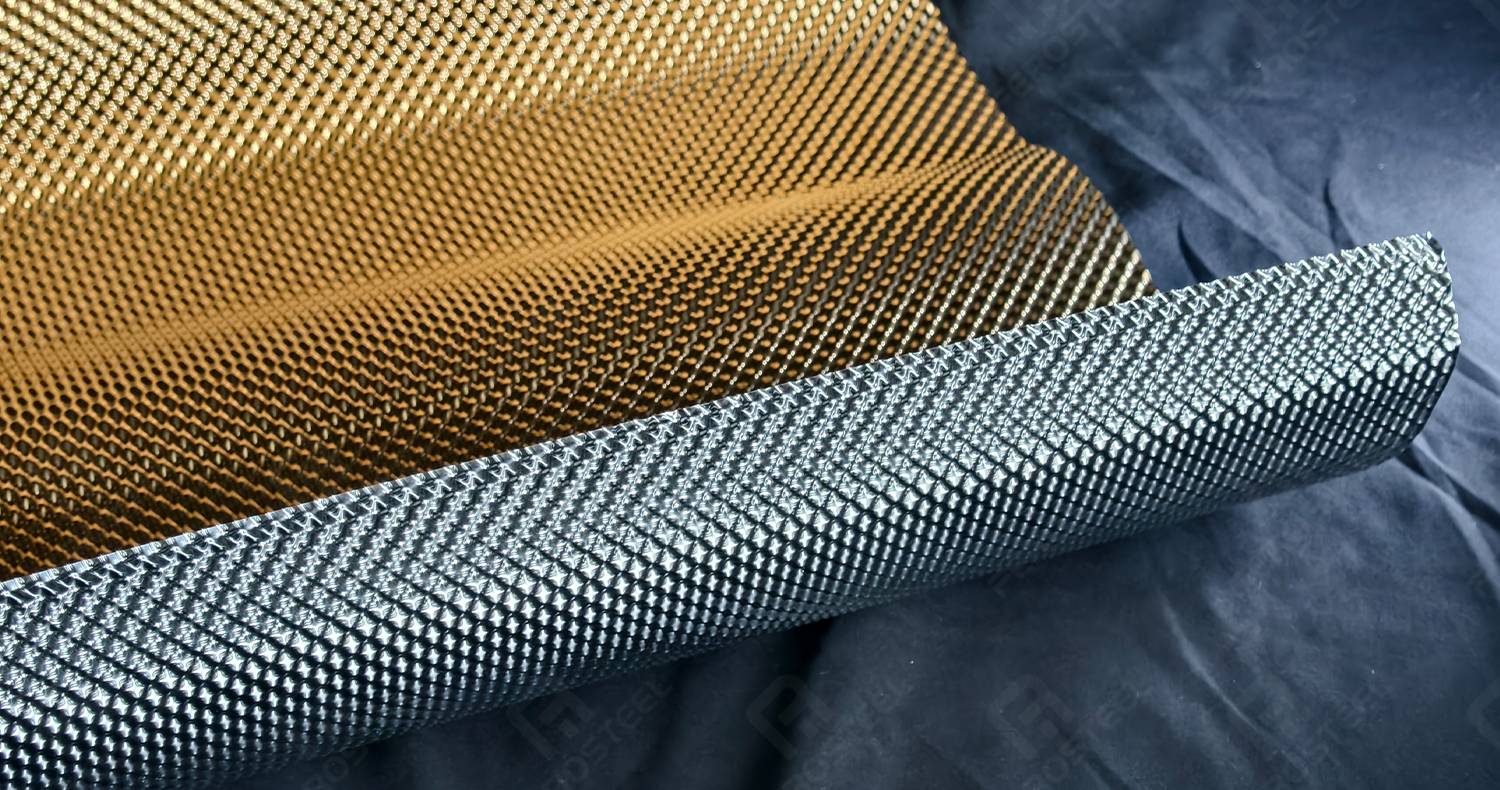
Here's the short answer: use 304 ultra-thin embossed stainless steel for hot-end exhaust and EV battery compartments (rated to ≥850°C), embossed aluminium for cold-end exhaust and HVAC applications (below 590°C), and multi-layer stainless wrap covers for the hottest runs up to 1000°C. Each application zone demands a different balance of temperature resistance, reflectivity, weight, and formability—and no single material wins all four.
If you have ever stared at an RFQ wondering whether to specify steel or aluminium, or whether 0.10mm is too thin for a battery tray shield, you are not alone. In this guide, we break down the selection logic application by application—exhaust systems, EV battery compartments, engine bays, industrial equipment, and marine HVAC—so you can specify the right automotive heat shield material with confidence.
**Key Takeaways** - **Application drives material selection**: hot-end exhaust (>800°C) demands 304 stainless steel; cold-end (<590°C) can use embossed aluminium; EV battery compartments require ultra-thin 304 stainless for thermal-runaway protection. - **The automotive heat shield material market hits USD 12.14 billion in 2025**, with BEV thermal-runaway protection and turbocharger applications as the fastest-growing segments (MarketsandMarkets). - **Embossing is not decorative**: it increases rigidity by up to 30%, improves convective heat dissipation through greater surface area, and dampens NVH—pattern choice matters as much as material choice. - **Three products cover 95% of applications**: 304 ultra-thin embossed stainless sheet (0.10–0.15mm), embossed aluminium coil (0.5–0.8mm), and 1000°C multi-layer stainless wrap covers. - **Always verify IATF 16949 certification and [ASTM A240](https://store.astm.org/a0240_a0240m-24.html) compliance** in your RFQ—OEM-grade sourcing demands full material traceability.
*Throughout this guide you will find direct links to Ferosteel's product lines. If you already know your heat zone and want to move fast, explore our full embossed heat shield sheet range and request a datasheet while you read.*
Walk into any Tier-1 thermal management engineering meeting and you will hear the same opening question: "What temperature does it see?" That single answer determines whether your automotive heat shield material is stainless steel, aluminium, or a multi-layer composite—and getting it wrong means either premature failure (under-specified) or unnecessary weight and cost (over-specified).
Every vehicle—and most industrial equipment—has three distinct thermal zones that dictate material selection:
• Hot end (>800°C): Exhaust manifolds, turbochargers, diesel particulate filters (DPFs), and catalytic converters. Only high-temperature alloys survive here. 304 stainless steel rated to ≥850°C is the baseline, with multi-layer wraps handling 1000°C peaks.
• Cold end (<590°C): Tailpipes, mufflers, underbody heat barriers, and HVAC ducting. Aluminium's melting point sits around 640°C with direct-contact resistance near 590°C (Chalco / Shao-yi), making it ideal for these zones—roughly one-third the weight of steel and significantly cheaper per square metre.
• Firewall and battery compartment: These zones do not see continuous extreme heat but must survive thermal events. EV battery shields, for instance, must contain thermal-runaway propagation—requiring materials that maintain structural integrity at 600°C+ for several minutes without perforation.
Polished aluminium reflects up to 90% of radiant heat (Shao-yi / Chalco)—but it deforms and eventually melts above 590°C. Stainless steel withstands 850°C+ with a thermal conductivity of only 15–25 W/mK (brazetools.com), making it an effective thermal barrier, but it is heavier and less reflective than aluminium. Multi-layer composites handle 1000°C but cost significantly more per unit. Specifying aluminium where steel is needed—or vice versa—is the most common sourcing mistake we see from first-time buyers.
Embossing—pressing patterns like round bean, 5-bar, stucco, or diamond into the sheet—serves three engineering functions, not decorative ones:
• Rigidity: Raised ribs act as miniature structural beams, increasing stiffness by up to 30% and allowing thinner gauges (down to 0.10mm) without oil-canning or fatigue cracking
• Heat dissipation: The textured surface increases total surface area, improving convective cooling in airflow zones
• NVH dampening: Non-uniform pattern geometry disrupts vibration modes, reducing the resonant drumming passengers hear as exhaust rasp
This is why embossed heat shield sheet consistently outperforms flat sheet in real-world automotive applications—the pattern is the engineering feature that makes ultra-thin gauges viable.
The exhaust system is where material selection gets most critical—and where the majority of automotive heat shield material is consumed. Turbocharger adoption is the fastest-growing segment in the global heat shield market (MarketsandMarkets), and every turbo application pushes temperatures well past what aluminium can survive.
At the hot end, exhaust gases exit the manifold at 800–900°C, turbocharger housings radiate intense heat, and DPFs regenerate at peak temperatures that would liquefy aluminium in minutes. The only practical automotive heat shield material for these locations is 304 austenitic stainless steel, which maintains structural integrity at ≥850°C and resists oxidation through thousands of thermal cycles.
Key specifications for hot-end exhaust applications:
• Material: 304 stainless steel, hardness 1/2H or 3/4H
• Thickness: 0.10–0.15mm (ultra-thin for weight savings without sacrificing rigidity)
• Embossing pattern: Round bean or diamond for maximum rigidity at thin gauges
• Thermal conductivity: 15–25 W/mK (brazetools.com)—low enough to act as an effective thermal barrier
The 304 ultra-thin embossed stainless steel heat shield sheet is engineered specifically for these conditions. For exhaust-system-specific formability requirements, the automotive exhaust system variant adds tailored stamping properties.
Further down the exhaust line—past the catalytic converter and into the tailpipe section—temperatures drop below 590°C. Here, an embossed aluminium heat shield becomes the smarter choice. It is roughly one-third the weight of stainless steel, reflects up to 90% of radiant heat when polished, and costs less per square metre.
The embossed aluminium heat shield coil—available in alloys 1050, 1060, 1100, and 3003 at 0.5–0.8mm thickness and widths up to 1250mm—is ideal for underbody heat barriers and cold-end exhaust shielding where large surface coverage matters more than peak temperature resistance. Stucco and orange peel patterns provide the formability needed to wrap complex underbody geometries.
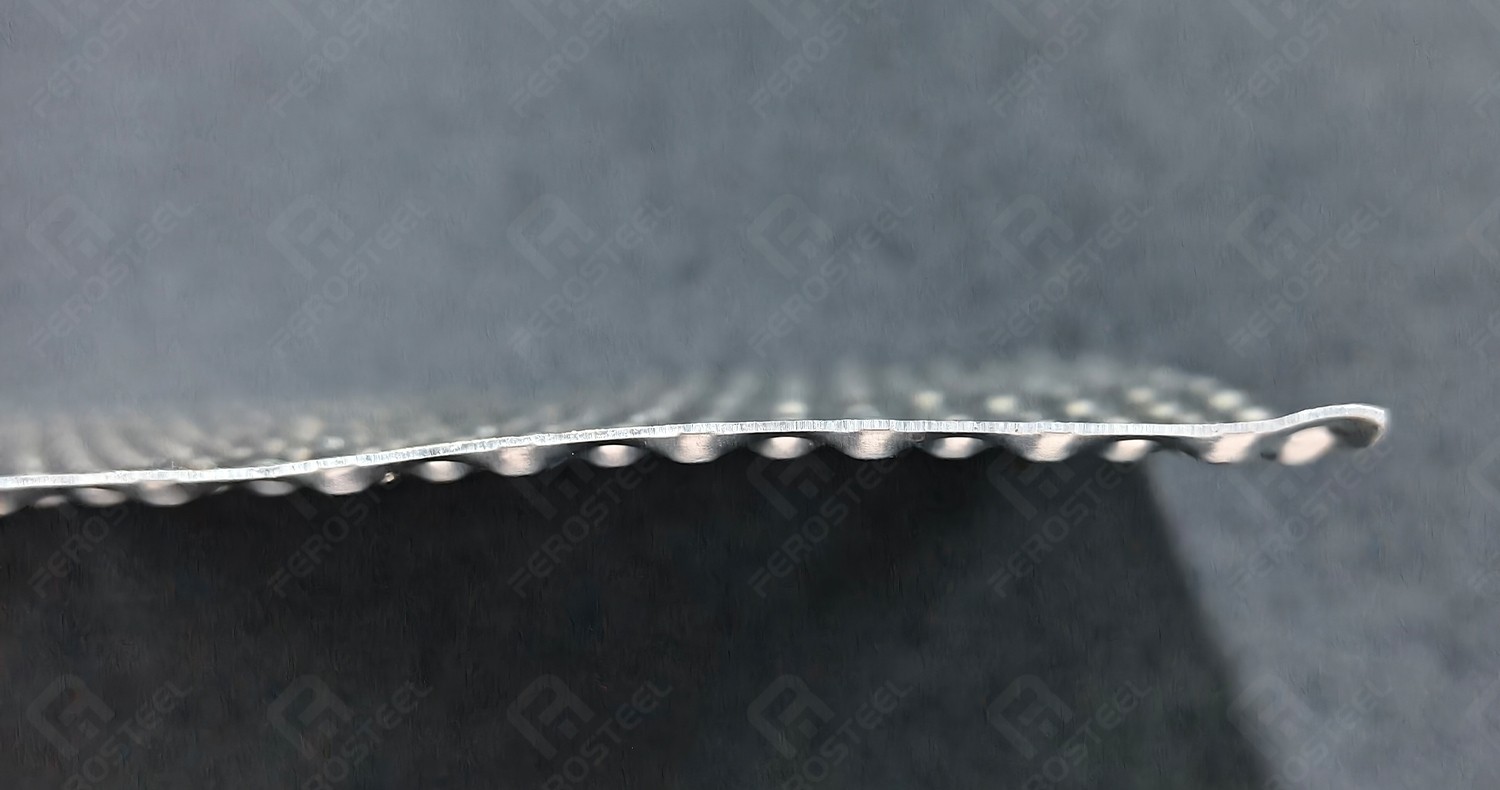
For the most extreme locations—turbocharger outlets, DPF shells, and high-performance exhaust headers—single-ply sheet is not enough. The 304 stainless steel exhaust heat insulation wrap cover uses a multi-layer construction rated to 1000°C, combining reflective stainless outer layers with insulating inner core material. This creates a true thermal barrier rather than just a reflector, dropping surface temperatures by 200–400°C and protecting nearby components and wiring.
Mini Story: The 3-Week Turbo Shield Decision
In January 2025, a Tier-1 exhaust supplier in Chongqing received an urgent RFQ from a domestic SUV OEM: heat shields for a new twin-turbo 2.0L platform, with PPAP due in three weeks. The engineering team initially specified aluminium for cost savings—until bench testing showed tailpipe-adjacent shields deforming at 620°C during sustained highway-load operation. They switched to 0.12mm 304 stainless with diamond embossing, passed thermal cycling on the second attempt, and hit the PPAP deadline with two days to spare. The material cost difference? About USD 0.18 per vehicle. The cost of a failed launch would have been six figures.
For more on how 304 stainless behaves in specific exhaust pipe heat shield applications, the exhaust heat shield stainless steel product page provides detailed thermal cycling data.
If there is one area where automotive heat shield material selection has changed dramatically in the last five years, it is the EV battery compartment. Battery electric vehicles (BEVs) now account for the largest share of EV heat shield demand (MarketsandMarkets), and the stakes are existential: a single thermal-runaway event can destroy a vehicle, trigger a recall, and devastate a brand's market position.
When a lithium-ion cell enters thermal runaway, internal temperatures spike to 600–1000°C in seconds, releasing flammable gases and propagating heat to adjacent cells. The battery compartment shield's job is twofold:
• Delay propagation: Buy time—ideally five minutes or more—for occupants to exit the vehicle before fire breaches the cabin
• Maintain structural integrity: The shield must not perforate, warp, or lose its barrier function during the thermal event, even as temperatures exceed 600°C for sustained periods
This demands a material that combines high melting point, low thermal conductivity, and structural toughness at elevated temperatures—exactly the profile of ultra-thin 304 stainless steel.
At first glance, 0.10mm seems too thin for a safety-critical barrier. But the engineering logic is compelling:
• Weight: EV platforms are weight-obsessed—every gram affects range. At 0.10–0.15mm, 304 stainless adds minimal mass while providing an 850°C+ melting-point barrier
• Embossing compensation: Diamond or round bean embossing restores the structural rigidity that thin gauge alone could not provide, making the sheet resistant to impact, vibration, and thermal cycling
• Formability: 1/2H temper 304 stainless can be deep-drawn into complex battery tray geometries without cracking during stamping
• Corrosion resistance: 304's 18% chromium content provides long-term resistance to electrolyte exposure and humidity—critical for a component expected to last the vehicle's lifetime
This is why ultra-thin 304 stainless has become the go-to automotive heat shield material for EV battery bottom shields and inter-cell barriers. The 304 ultra-thin embossed sheet hits all four requirements simultaneously.
The industry is converging on this approach rapidly. In October 2024, ElringKlinger launched ElroSafe, a battery bottom shield designed specifically for thermal-runaway protection, using thin-gauge metal sheet as the primary barrier layer. Meanwhile, Aspen Aerogels' PyroThin thermal barrier has been adopted by Valmet Automotive for the Porsche electric 718 series, combining aerogel insulation with structural metal layers to achieve lightweight thermal-runaway containment. Autoneum further signalled the trend by opening a dedicated e-mobility R&D centre in Shanghai in November 2024, focused on EV thermal management solutions.
Mini Story: The PPAP Pressure Cooker
Sarah Chen, a battery pack engineer at a Shenzhen EV startup, faced a nightmare scenario in March 2025: the OEM had moved the SOP date forward by six weeks, and her team's PPAP submission for the battery bottom shield was due in 10 days. The original spec called for a 0.8mm aluminium plate—safe under normal operation, but thermal-runaway simulation showed deformation beginning at 580°C after just 90 seconds, well short of the five-minute containment target. Sarah's team switched to 0.12mm 304 stainless with round bean embossing, re-ran the simulation (now showing 5+ minutes of barrier integrity), and submitted the PPAP package on time. The material switch added 0.3kg per pack—and saved the entire programme.
Beyond exhaust and battery systems, the engine bay and underbody host a web of components that need thermal protection: plastic intake manifolds (which soften above 150°C), wiring harnesses, fuel lines, and sound-deadening insulation. Each has a failure temperature well below exhaust gas temperatures, making the automotive heat shield plate a critical design element rather than an afterthought.
For engine bay applications, 304 stainless steel offers the best combination of durability and temperature resistance. Unlike aluminium, it will not deform under the sustained radiant heat of a turbocharged engine block, and its embossed surface provides the rigidity needed for large-format shields that span the firewall or under-hood area without additional support brackets.
Underbody heat barriers—sheets installed between the exhaust system and the cabin floor—benefit specifically from diamond or 5-bar embossing patterns, which maximise bending stiffness across wide spans while keeping weight down. The exhaust heat shield stainless steel variant is engineered for these underbody applications, where stone impingement and road salt add corrosion challenges that 304 stainless handles naturally thanks to its chromium oxide passive layer.
For cold zones in the engine bay—such as air intake ducting or ECU housings where temperatures stay below 200°C—aluminium coil remains a valid, lighter alternative that saves cost without compromising protection.
Automotive heat shield material is not just for vehicles. Industrial generators, air compressors, stationary engines, and construction equipment all require thermal shielding—and the application-driven selection logic is remarkably similar.
Stationary generators run for hours at sustained high temperatures, with exhaust manifold surfaces reaching 500–700°C. For large-surface enclosure insulation, embossed aluminium heat shield coil (0.5–0.8mm, alloys 1050 or 3003) provides cost-effective radiant heat reflection across broad areas. Its formability allows wrapping complex enclosure geometries, and stucco or orange peel patterns add rigidity without increasing thickness—critical when you are covering several square metres of housing.
For the exhaust riser—the pipe connecting the engine to the muffler or exhaust stack—temperatures can exceed 900°C. This is where the 1000°C multi-layer wrap cover earns its place. Its multi-layer stainless steel construction insulates rather than merely reflects, reducing surface temperatures by 200–400°C and protecting nearby equipment, wiring, and personnel. The 304 stainless steel exhaust heat insulation wrap cover is designed for exactly these high-stress industrial exhaust applications.
The global market reflects this demand: over 1.2 billion heat shield units have been installed across automotive and industrial applications worldwide (industryresearch.biz), and industrial equipment represents a growing share as emission standards tighten and equipment runs hotter than ever.
For industrial-grade heat shield applications requiring full material traceability, Ferosteel supplies embossed stainless and aluminium sheet from its Foshan facility with EN 10204 3.1 MTC documentation on every coil.
Two environments that test automotive heat shield material in very different ways: marine engine rooms and commercial HVAC systems.
Marine applications combine two enemies of aluminium: sustained high temperature and corrosive salt spray. In ship engine rooms, exhaust pipes from marine diesel engines run at 400–600°C in a highly corrosive atmosphere where chlorides attack unprotected metal. 304 stainless steel is the clear choice here—its chromium-nickel composition resists both oxidation at elevated temperature and pitting corrosion from salt exposure. Round bean embossing provides the rigidity needed for the large-format shields used in confined engine room spaces where vibration from marine engines is constant.
In HVAC systems, the priority shifts from peak temperature resistance to radiant heat reflection and formability. Ductwork near furnaces or compressor units benefits from polished aluminium's 90% reflectivity (Shao-yi / Chalco), and aluminium's superior formability allows complex duct transitions, bends, and wraps without cracking. The embossed aluminium heat shield coil in stucco or orange peel patterns is standard in commercial HVAC thermal insulation, where the embossed texture adds rigidity to thin-gauge duct wraps while maintaining the formability installers need on site.
When you are at the specification stage, you need a fast, reliable comparison. Here are three reference tables covering material properties, embossing pattern matching, and product specifications.
|
Property |
304 Stainless Steel |
Embossed Aluminium |
Multi-Layer Wrap |
|
Max Temperature |
≥850°C |
~590°C (direct contact) |
1000°C |
|
Density |
~8.0 g/cm³ |
~2.7 g/cm³ |
Multi-layer composite |
|
Radiant Reflectivity |
~60% |
Up to 90% (polished) |
Reflective + insulating |
|
Thermal Conductivity |
15–25 W/mK |
~200 W/mK |
Low (insulated core) |
|
Relative Cost |
Medium |
Low |
High |
|
Corrosion Resistance |
Excellent (Cr-Ni alloy) |
Good (oxide layer) |
Excellent |
|
Best Application |
Hot-end exhaust, EV battery |
Cold-end exhaust, HVAC |
Turbo outlets, DPF, risers |
|
Pattern |
Rigidity |
Formability |
Reflectivity |
Best Application |
|
Notice about Ferosteel 2022 May Day Holiday arrangement
DEBUG Test Article
Contact Us
© 2026 Foshan Ferosteel Co., Ltd All Rights
Reserved. | Sitemap | XML | Privacy Policy
 IPv6 network supported IPv6 network supported
 leave a message leave a message |




 Office address: 26 Floor, Shibo Financial Center, Fenjiang South Road No.38, Chancheng, Foshan, GuangDong, China