When selecting the right stainless steel metal for your project, one of the most common questions is: What is the difference between stainless steel 304 and 316?
Both stainless steel 304 and 316 stainless steel are widely used in construction, architecture, and industrial applications, especially in the production of stainless steel sheets. While they may look similar, their performance, cost, and ideal applications differ significantly.
Understanding these differences will help you choose the most suitable material for durability, corrosion resistance, and long-term value.
Stainless steel 304 is the most widely used grade in the stainless steel family. It is an austenitic stainless steel known for its excellent balance of corrosion resistance, workability, and affordability.
Composition: 18% Chromium, 8% Nickel
Strong resistance to oxidation and rust in normal environments
Excellent formability and weldability
Suitable for a wide range of stainless steel sheets finishes
Lower cost compared to 316 stainless steel
Because of its versatility, stainless steel 304 is commonly used in both decorative and functional applications.
Interior decorative panels
Elevator stainless steel sheets
Kitchen equipment and sinks
Furniture and wall cladding
General-purpose stainless steel metal fabrication
For most indoor projects, stainless steel 304 sheets provide more than enough performance at a competitive price.
316 stainless steel is a premium-grade material that includes molybdenum, which significantly enhances its resistance to corrosion—especially in harsh environments.
Composition: 16% Chromium, 10% Nickel, 2–3% Molybdenum
Superior resistance to chloride and chemical corrosion
Excellent performance in marine and coastal environments
Higher durability under extreme conditions
Higher cost than stainless steel 304
The addition of molybdenum is what makes 316 stainless steel stand out. It prevents pitting and corrosion caused by saltwater or chemicals, making it ideal for demanding applications.
Marine and coastal architecture
Outdoor decorative stainless steel sheets
Chemical processing equipment
Medical and food-grade environments
High-end architectural stainless steel metal projects
Although both materials belong to the same family, the differences between stainless steel 304 and 316 stainless steel are critical when choosing the right stainless steel sheets.
316 stainless steel offers superior corrosion resistance due to molybdenum content. It performs much better in environments with salt, humidity, or chemicals.
Stainless steel 304 performs well in standard indoor or dry environments but may corrode over time in coastal areas.
Stainless steel 304 sheets are more cost-effective and widely available.
316 stainless steel sheets are more expensive due to their enhanced composition and performance.
Use 304 stainless steel for indoor and controlled environments
Use 316 stainless steel for outdoor, marine, or chemical environments
While both materials are durable, 316 stainless steel metal offers a longer lifespan in harsh conditions, reducing maintenance and replacement costs over time.
When selecting between stainless steel 304 and 316 stainless steel, consider the following factors:
Environment: Is it indoor, outdoor, or coastal?
Budget: Do you need a cost-effective or premium solution?
Aesthetic requirements: Decorative finishes, textures, and colors
Maintenance expectations: Long-term exposure vs controlled use
For most architectural and decorative applications, stainless steel 304 sheets are sufficient. However, if your project involves exposure to moisture, salt, or chemicals, upgrading to 316 stainless steel sheets is a smart investment.
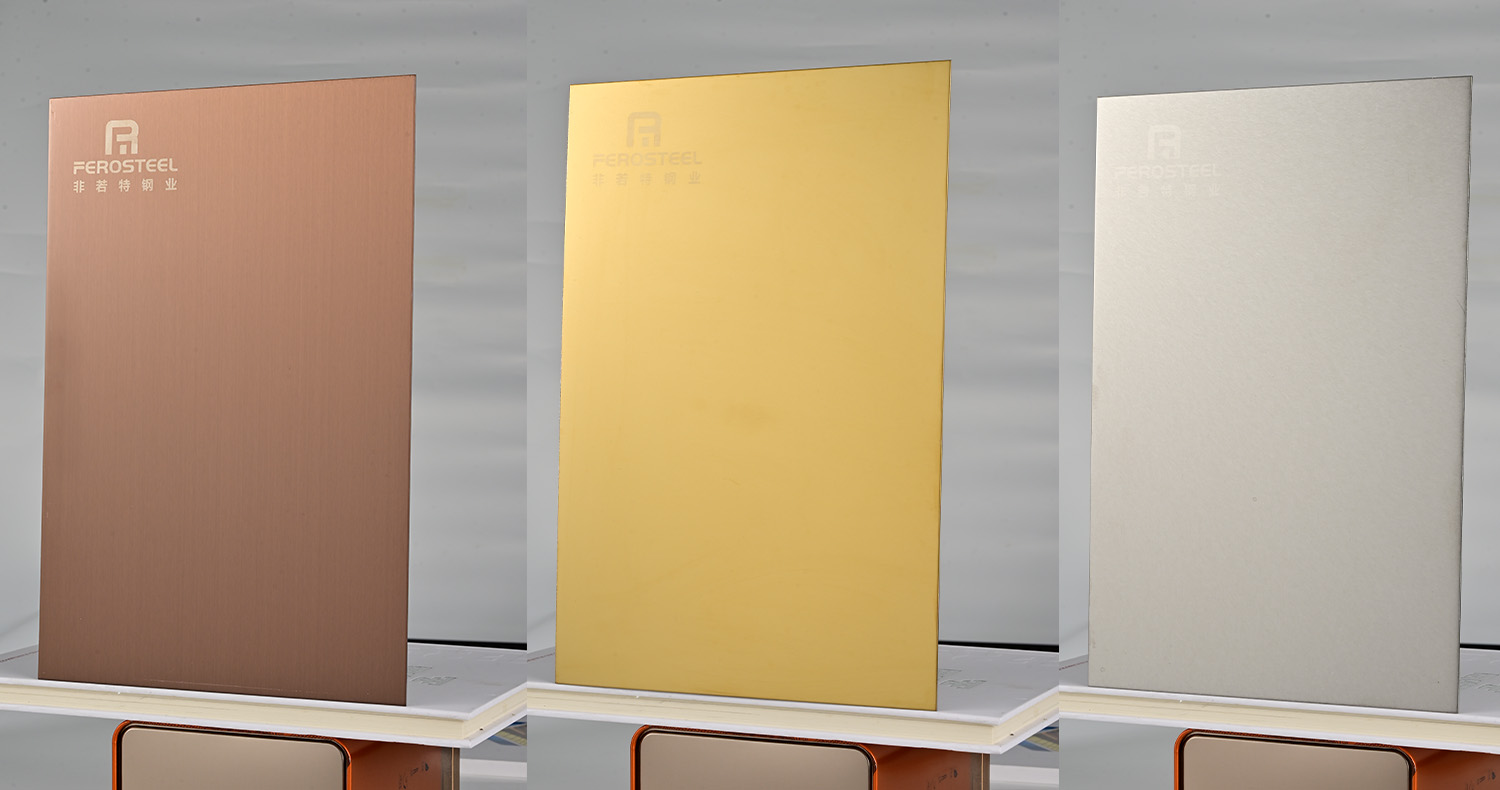
At Ferosteel, we specialize in manufacturing high-quality stainless steel sheets for global markets. We offer both stainless steel 304 and 316 stainless steel in a wide range of decorative finishes.
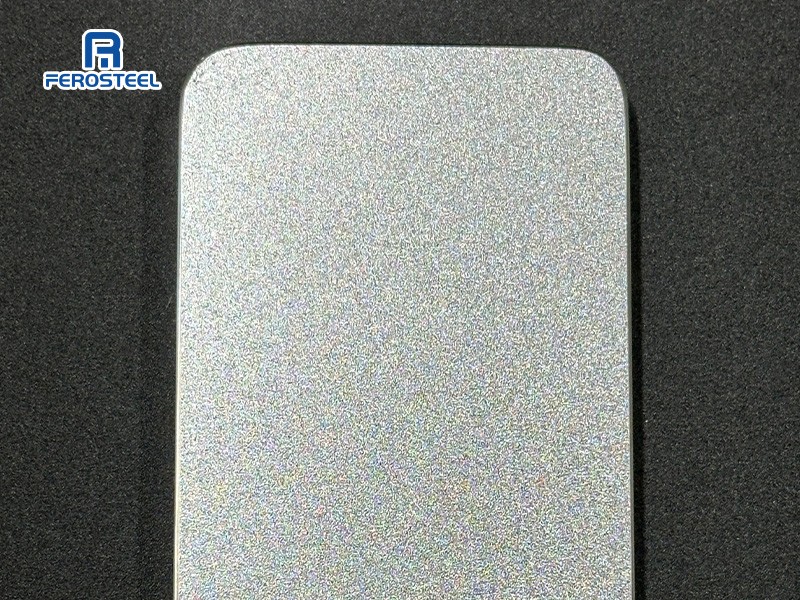
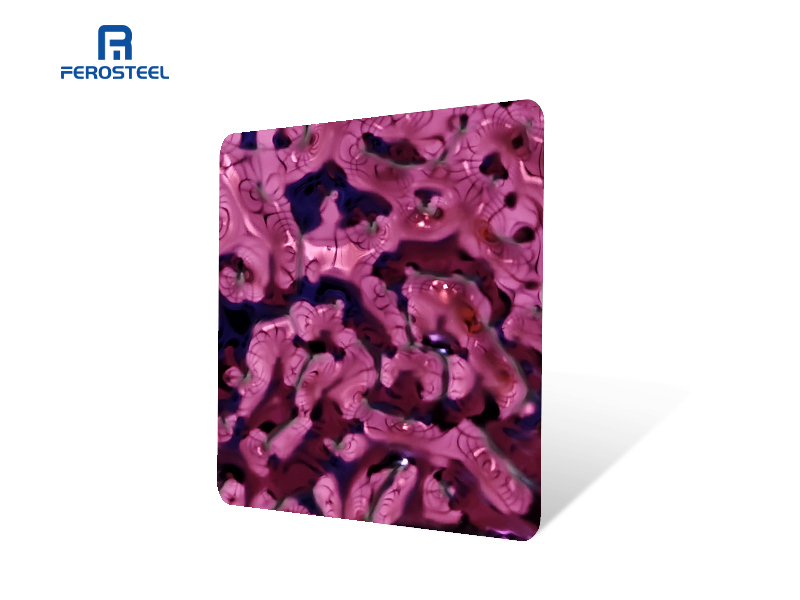
PVD coated stainless steel sheets
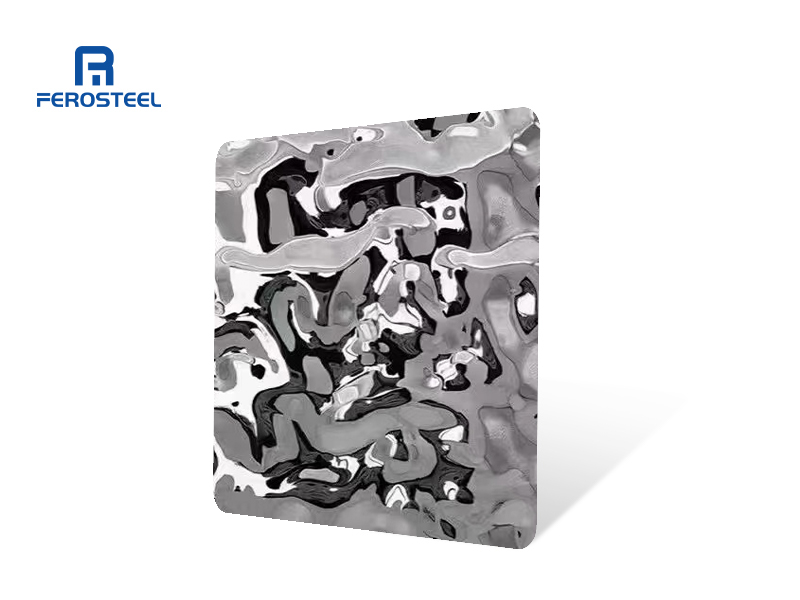
Water ripple stainless steel sheets
Mirror finish stainless steel metal panels
Brushed and embossed stainless steel sheets
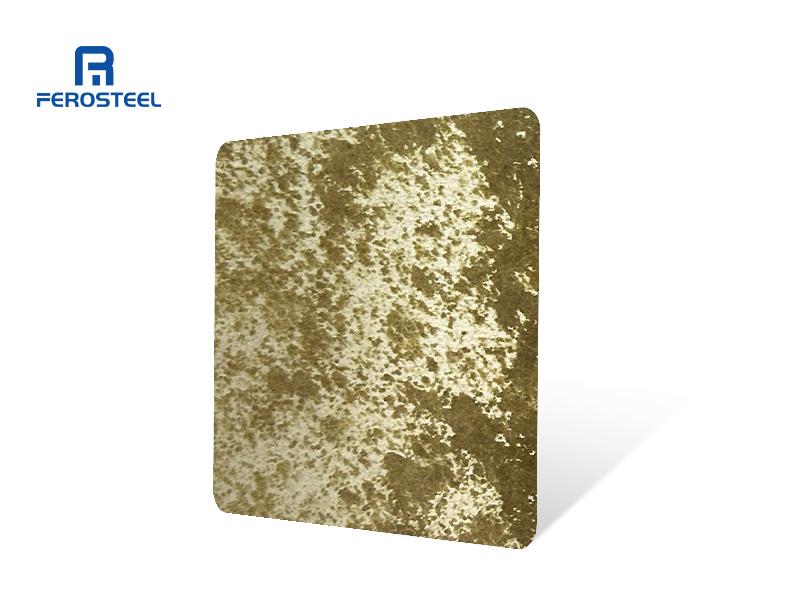
Antique copper decorative stainless steel sheets
Explore our products:
Factory direct pricing
Custom sizes and thickness (0.3mm–2.0mm)
Fast production and global export
OEM & bulk order support
Professional service for contractors and wholesalers
Both stainless steel 304 and 316 stainless steel are excellent materials, but they serve different purposes.
Choose stainless steel 304 sheets for cost-effective, indoor, and decorative use
Choose 316 stainless steel sheets for superior corrosion resistance in harsh environments
By understanding these differences, you can ensure better performance, longer lifespan, and higher value for your project.
 Office address: 26 Floor, Shibo Financial Center, Fenjiang South Road No.38, Chancheng, Foshan, GuangDong, China
  Phone
: +86 -18024913898
Phone
: +86 -18024913898 Email
: [email protected]
Email
: [email protected]


 IPv6 network supported
 leave a message