



Understanding 304 and 316 Stainless Steel: Definitions
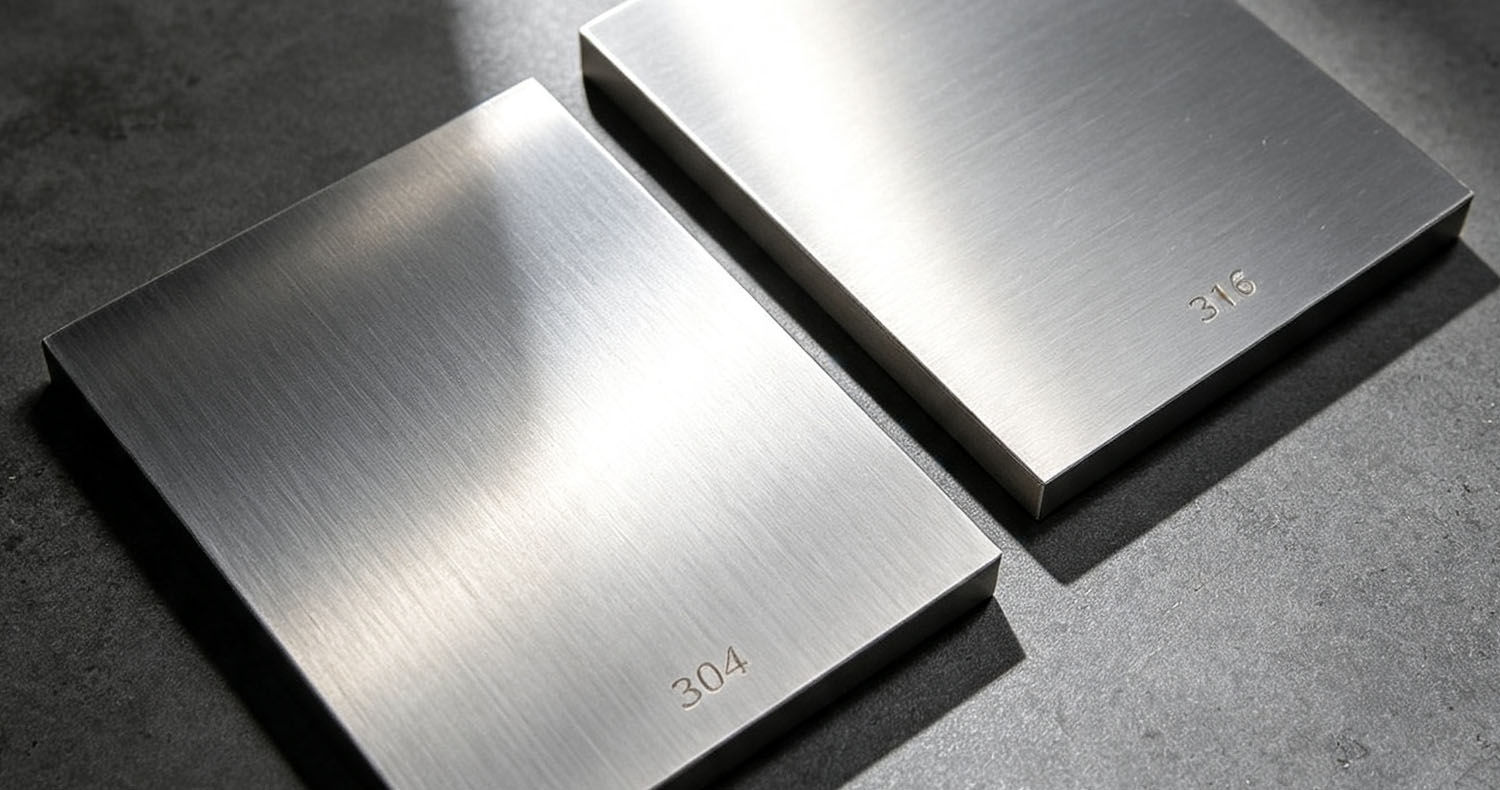
304 stainless steel (also known as 18/8 or A2 stainless steel) is the most widely produced austenitic stainless steel grade worldwide, accounting for over 50% of global stainless steel consumption. Its standard composition includes approximately 18% chromium and 8% nickel, with carbon content limited to 0.08% max. It offers good formability, excellent weldability, and reliable corrosion resistance in most indoor and mild outdoor environments.
316 stainless steel (also known as 18/10 or marine-grade stainless steel) is the second most common austenitic grade, distinguished by the addition of 2–3% molybdenum and slightly higher nickel content (10–14%). The molybdenum alloying element dramatically improves resistance to pitting and crevice corrosion caused by chlorides, bromides, and other halide ions. This is why 316 is the specified grade for marine, coastal, and chemical-processing applications.
For decorative stainless steel sheet manufacturers like Ferosteel, both grades are available in the full range of surface finishes — 8K mirror, No.4 satin, HL hairline, PVD colored, etched, embossed, and anti-fingerprint coated — making the grade decision primarily about environment and budget rather than aesthetic options.
Chemical Composition Side-by-Side
The table below provides the standard chemical composition ranges for both grades, which directly explains their performance differences:
| Element | 304 Stainless Steel (%) | 316 Stainless Steel (%) | Function in Decoration |
|---|---|---|---|
| Chromium (Cr) | 18.0 – 20.0 | 16.0 – 18.5 | Forms passive oxide layer for corrosion resistance and shine |
| Nickel (Ni) | 8.0 – 10.5 | 10.0 – 14.0 | Stabilizes austenitic structure; improves formability and toughness |
| Molybdenum (Mo) | 0.0 (none) | 2.0 – 3.0 | Key differentiator — resists chloride pitting and crevice corrosion |
| Carbon (C) | ≤ 0.08 | ≤ 0.08 | Affects weldability; low-carbon variants (304L/316L) available |
| Manganese (Mn) | ≤ 2.0 | ≤ 2.0 | Deoxidizer; improves hot-working properties |
| Silicon (Si) | ≤ 1.0 | ≤ 1.0 | Deoxidizer; improves oxidation resistance at high temps |
| Phosphorus (P) | ≤ 0.045 | ≤ 0.045 | Impurity — minimized for corrosion resistance |
| Sulfur (S) | ≤ 0.030 | ≤ 0.030 | Impurity — free-machining variants (303) add sulfur |
Source: ASTM A240 / A240M standard specification for chromium and chromium-nickel stainless steel plate, sheet, and strip for pressure vessels and for general applications. Ferosteel sources raw coils from certified Chinese mills including TISCO, JISCO, and Baosteel, all with traceable mill test certificates (MTC).
Performance Comparison: 6 Critical Factors for Decorative Projects
1. Corrosion Resistance
This is the most significant difference between the two grades. 304 performs well in rural and urban indoor environments with normal atmospheric exposure. However, in the presence of chlorides — such as road salt, coastal salt spray, swimming pool chlorine, or cleaning chemicals — 304 is vulnerable to pitting corrosion (small holes in the surface) and crevice corrosion (corrosion in gaps between panels or behind fasteners).
316's molybdenum addition raises its pitting resistance equivalent number (PREN) to approximately 24–26, compared to 18–20 for 304. In practical terms, 316 can withstand chloride concentrations roughly 5–10 times higher than 304 before pitting initiates. For decorative panels installed in hotel pool areas, coastal resort lobbies, or building exteriors within 5 km of the ocean, 316 is not an upgrade — it is a necessity.
2. Strength and Mechanical Properties
Both grades have nearly identical mechanical properties for decorative sheet applications:
| Property | 304 | 316 |
|---|---|---|
| Tensile Strength (min) | 515 MPa (75,000 psi) | 515 MPa (75,000 psi) |
| Yield Strength (min) | 205 MPa (30,000 psi) | 205 MPa (30,000 psi) |
| Elongation (min, 50mm) | 40% | 40% |
| Hardness (HB max) | 201 | 217 |
| Density | 8.00 g/cm³ | 7.98 g/cm³ |
For decorative wall panels, ceiling systems, elevator cab interiors, and column cladding, the structural difference is negligible. Both grades can be formed, bent, rolled, and welded using the same fabrication techniques. 316 has slightly higher work-hardening rate, which means it may require slightly more force during deep drawing operations, but this is rarely a factor for flat or lightly formed decorative sheets.
3. Heat and Temperature Resistance
304 offers good oxidation resistance in continuous service up to approximately 870°C (1600°F), and intermittent service up to 925°C (1700°F). 316 performs similarly, with continuous service up to 870°C and slightly better resistance to sulfur-bearing atmospheres at elevated temperatures due to its molybdenum content.
For decorative applications, heat resistance is relevant primarily for kitchen backsplashes, fireplace surrounds, and industrial facility interiors. In these cases, both grades are more than sufficient — the decision still comes down to corrosion exposure and budget rather than thermal performance.
4. Aesthetic Finishing Capabilities
Both 304 and 316 accept the complete range of decorative surface finishes available at Ferosteel's Foshan facility:
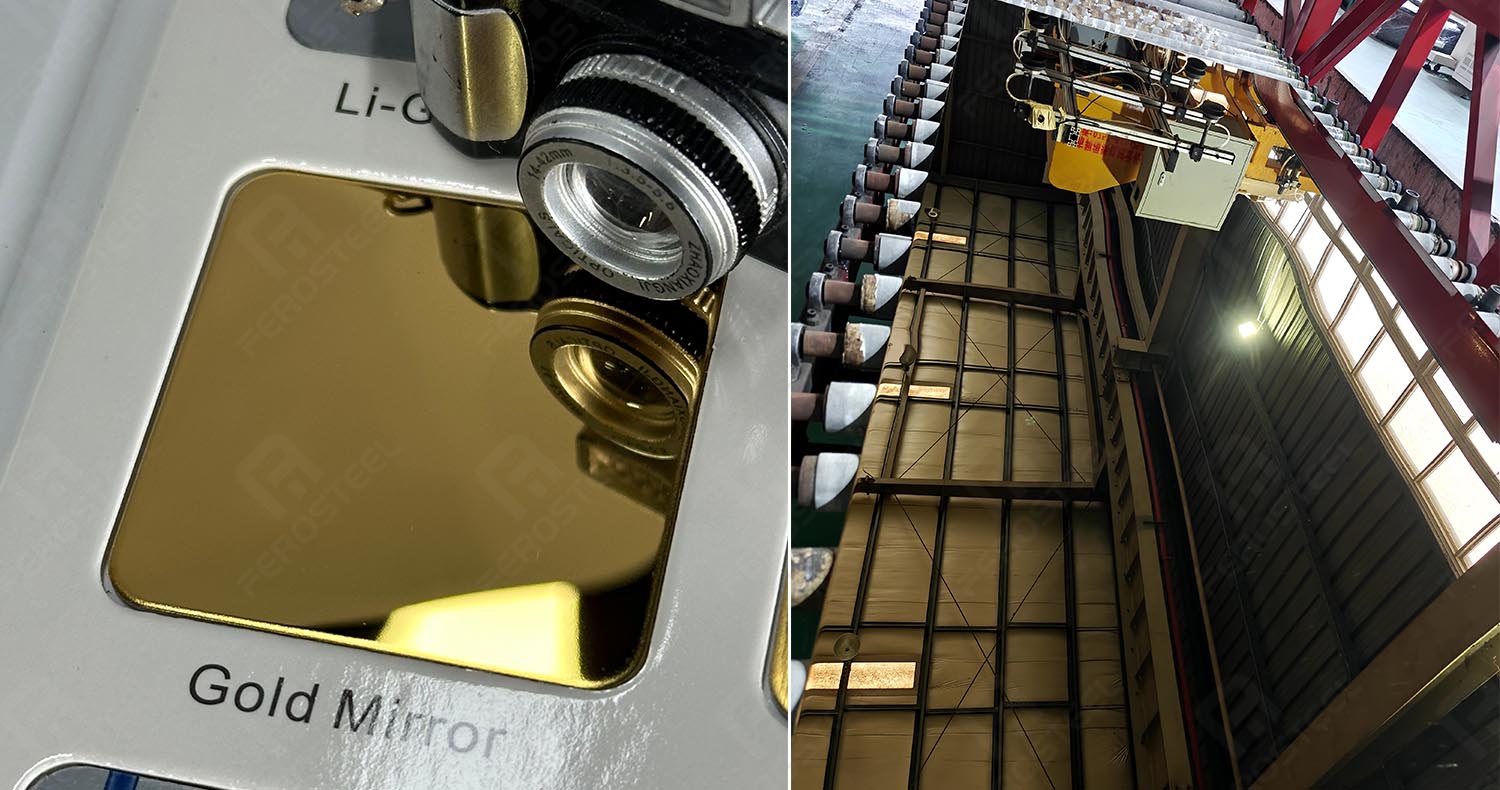
- 8K Mirror Polishing — reflective, high-gloss finish for luxury retail and hotel lobbies
- No.4 Satin / HL Hairline — brushed directional finish for elevators and commercial spaces
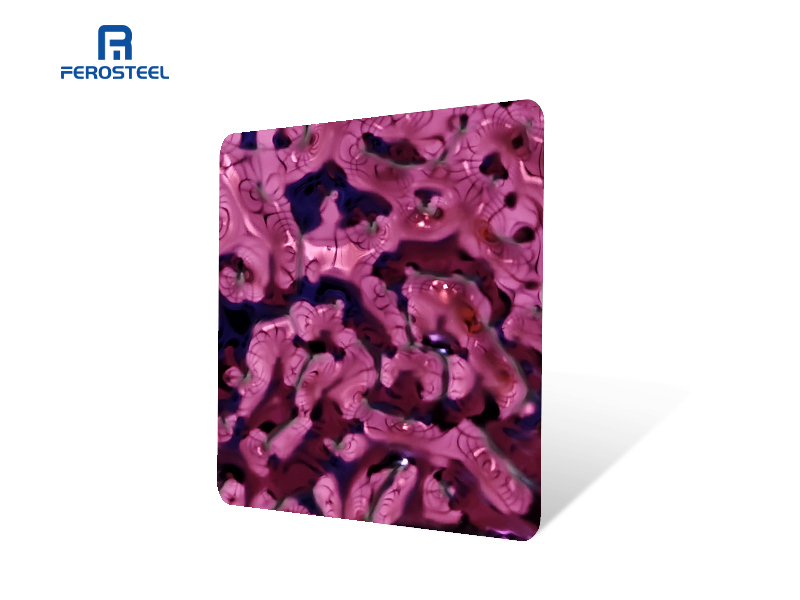
- PVD Vacuum Coating — titanium nitride, rose gold, champagne gold, bronze, black, and custom colors
- Chemical Etching — custom patterns, logos, and textures for feature walls and doors
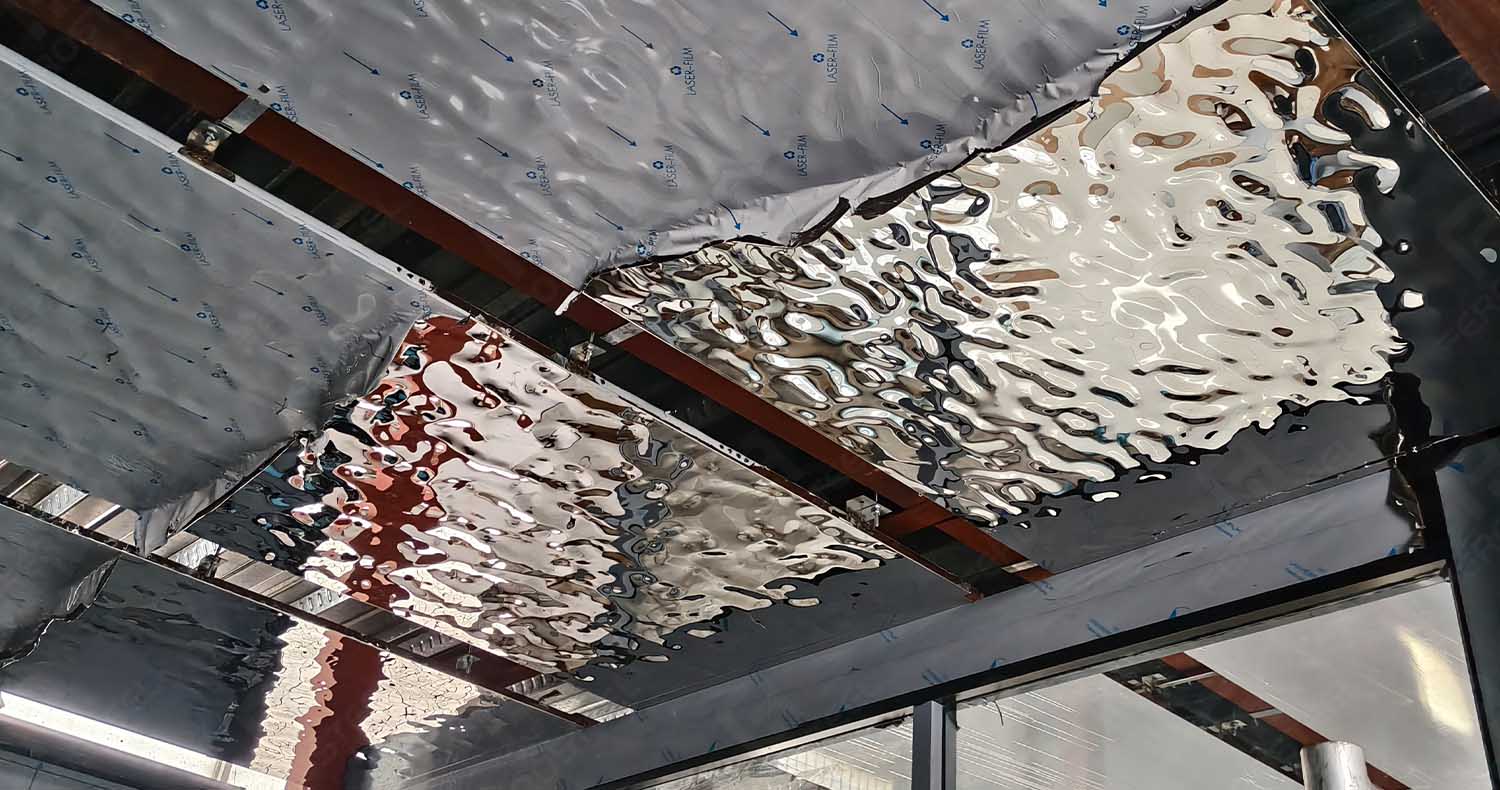
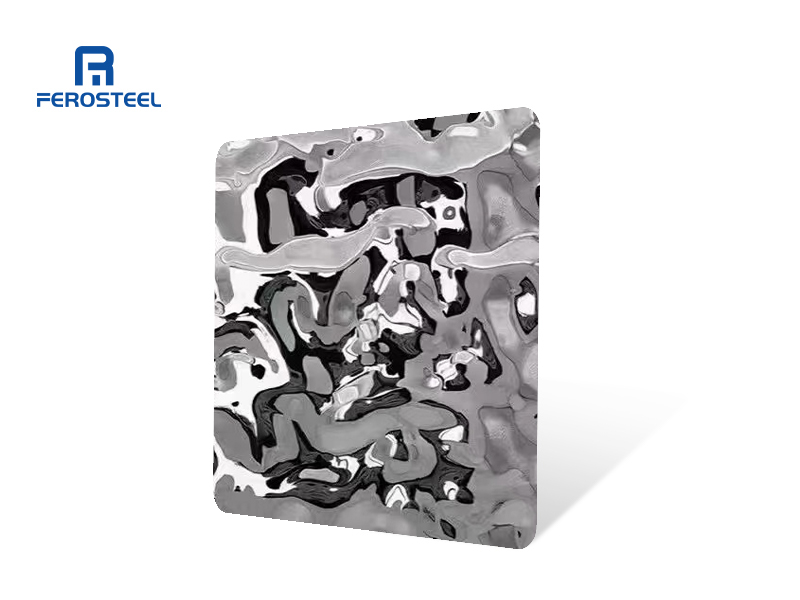
- Embossing / Water Ripple — three-dimensional textures for ceilings and feature panels
- Anti-Fingerprint (AFP) Coating — nano-ceramic topcoat for high-traffic areas
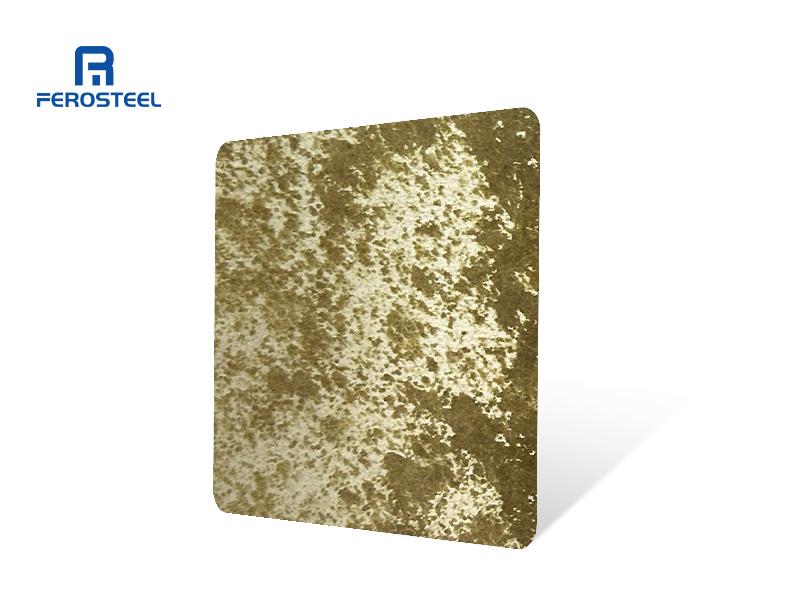
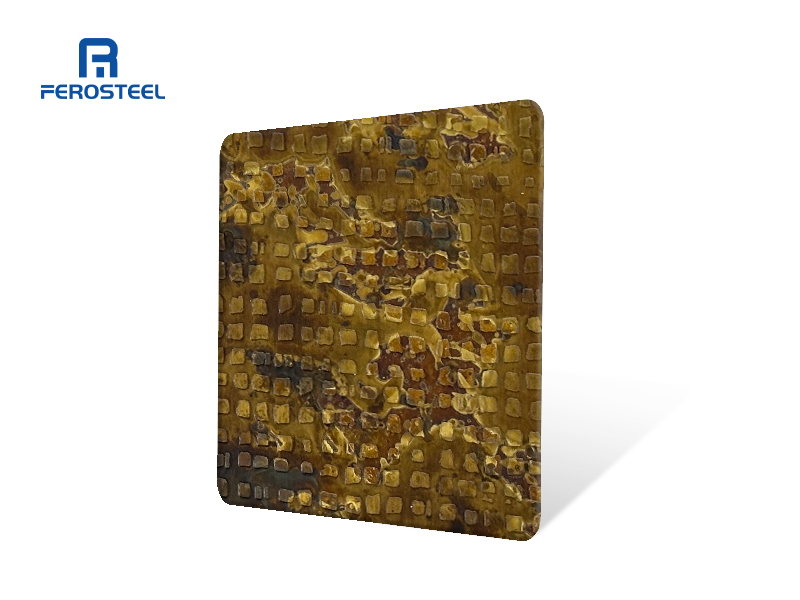
- Antique Copper / Bronze Plating — vintage patina finishes for hospitality and heritage projects
One practical note: 316's higher alloy content can result in slightly longer processing times for 8K mirror polishing and PVD coating, and color matching across large batches should be verified with physical samples before full production. Ferosteel's in-house PVD line handles both grades with consistent color tolerance of ΔE ≤ 1.5.
5. Cost Comparison
Price is often the deciding factor for project managers and procurement teams. As of 2026, the raw material price differential between 304 and 316 coils typically ranges from 15% to 25%, depending on nickel and molybdenum market prices. For finished decorative sheets with PVD coating or etching, the percentage differential narrows slightly because processing costs are similar, but 316 still carries a meaningful premium.
However, the total cost of ownership calculation should include:
- Installation cost — same for both grades
- Maintenance cost — 316 requires less frequent cleaning and corrosion treatment in harsh environments
- Replacement cost — 304 panels that develop rust staining may need refinishing or replacement within 5–10 years in coastal areas; 316 can last 20+ years with minimal maintenance
- Brand reputation — visible corrosion on a luxury hotel or high-end retail space can damage brand perception far beyond the material cost
6. Weldability and Fabrication
Both grades are readily weldable using GTAW (TIG), GMAW (MIG), and resistance welding methods. For decorative projects where welds are visible (e.g., mirror-finish feature walls), post-weld polishing and passivation are required regardless of grade. 316 may require slightly more heat input during welding due to its higher thermal conductivity, but experienced fabricators handle both grades routinely.
For projects requiring extensive welding, the low-carbon variants 304L and 316L (carbon ≤ 0.035%) are recommended to avoid intergranular corrosion in the heat-affected zone. Ferosteel can supply both standard and L-grade materials upon request.
Application Guide: When to Specify Which Grade
| Application / Environment | Recommended Grade | Rationale |
|---|---|---|
| Elevator cab interiors (office buildings, malls, hotels) | 304 | Controlled indoor environment; 304 is industry standard (~80% of elevator specs) |
| Hotel lobby walls and columns | 304 | Indoor, climate-controlled; full range of PVD colors available |
| Retail store interiors | 304 | Indoor application; anti-fingerprint coating recommended for high-touch areas |
| Residential kitchens and interiors | 304 | Normal household cleaning chemicals; 304 sufficient |
| Indoor swimming pool areas | 316 | Chlorine and chloramine vapor exposure; 304 will pit over time |
| Coastal hotel interiors (within 5 km of ocean) | 316 | Salt aerosol penetrates building envelopes; 316 prevents tea staining |
| Building exterior facades and cladding | 316 | Rain, pollution, temperature cycling; 316 required for long-term aesthetics |
| Outdoor sculptures and feature walls | 316 | Full environmental exposure; 316 maintains finish integrity |
| Hospital and healthcare interiors | 304 (or 316 for operating rooms) | 304 handles standard disinfectants; 316 for high-bleach areas |
| Food and beverage processing areas | 304 (or 316 for acidic/salty products) | 304 is FDA-approved for general food contact; 316 for corrosive food environments |
| Industrial facility interiors (chemical plants, refineries) | 316 | Potential chemical splash and fume exposure |
| Sauna and steam room interiors | 316 | Continuous high humidity and temperature cycling |
Ferosteel: Your Factory-Direct Source for Both Grades
Ferosteel is a professional decorative stainless steel sheet manufacturer based in Foshan (Shunde), Guangdong — China's stainless steel industrial core. Since 2017, we have specialized in the design, production, and export of premium decorative stainless steel panels, serving over 700 clients across hospitality, residential, retail, and commercial fit-out markets worldwide.
Our Capabilities for 304 and 316 Decorative Sheets
- Raw Material — Coils sourced from certified Chinese mills (TISCO, JISCO, Baosteel) with traceable mill test certificates; both 304 and 316 (including 304L/316L) in stock
- Grades Available — 201, 304, 304L, 316, 316L
- Thickness Range — 0.3mm to 3.0mm (standard decorative sheets); custom thicknesses available
- Sheet Sizes — 4'×8' (1219×2438mm), 4'×10' (1219×3048mm), and custom cut-to-size via CNC shearing
- Surface Finishes — 8K mirror, No.4 satin, HL hairline, PVD colored (12+ standard colors + custom matching), chemical etching, embossing, water ripple, anti-fingerprint, antique copper/bronze
- Certifications — ISO 9001 quality management system, SGS material testing reports
- MOQ — 50 sheets for standard colors/finishes; custom colors and etched patterns require 100–200 sheet minimum
- Lead Time — 7–15 working days for standard products; 20–30 days for custom PVD colors and large etched orders
- Export Experience — Shipping to 50+ countries; familiar with Incoterms 2020 (FOB, CIF, DDP); can arrange sea freight, air freight, and express delivery
Explore our product range:
- PVD Colored Stainless Steel Sheets — available in both 304 and 316 grades
- Water Ripple Stainless Steel Sheets — 3D textured panels for ceilings and feature walls
- Antique Copper Stainless Steel Sheets — vintage finishes for hospitality projects
- Stainless Steel Elevator Decoration — complete elevator cab panel solutions
Frequently Asked Questions
A: The main difference is chemical composition: 316 contains 2–3% molybdenum while 304 does not. Molybdenum significantly enhances resistance to chloride-induced corrosion, making 316 suitable for coastal, marine, and high-humidity environments, while 304 is the standard choice for most interior decorative applications.
A: Yes, 316 stainless steel typically costs 15–25% more than 304 due to the addition of molybdenum and higher nickel content. For interior decorative projects where chloride exposure is minimal, 304 offers the best value; for coastal or high-corrosion environments, the premium for 316 is justified by reduced maintenance and longer service life.
A: 304 stainless steel can be used outdoors in mild, low-pollution, non-coastal environments, but it is more susceptible to surface rust (tea staining) in areas with salt spray, high humidity, or industrial pollution. For outdoor applications within 5–10 km of a coastline, 316 is strongly recommended. If 304 must be used outdoors, regular cleaning (every 3–6 months) with a pH-neutral stainless steel cleaner can extend its aesthetic life.
A: 304 stainless steel is the industry standard for elevator interior decoration, accounting for approximately 80% of elevator decorative panel specifications. It offers excellent formability, a wide range of decorative finishes (mirror, brushed, PVD colored, etched), and sufficient corrosion resistance for controlled indoor environments. 316 is specified only for elevators in coastal buildings, swimming pool areas, or highly corrosive industrial settings.
A: Both 304 and 316 accept the full range of decorative surface finishes including 8K mirror polishing, No.4 satin, HL hairline, PVD vacuum coating, chemical etching, embossing, and anti-fingerprint coating. However, 316 may require slightly longer processing times for mirror polishing and PVD coating due to its higher alloy content, and color consistency across batches should be verified with physical samples for large projects.
A: Yes, it is common practice to use 316 for high-corrosion zones (pool areas, exterior cladding, coastal exposures) and 304 for standard interior areas (elevators, lobbies, retail spaces) within the same project. This approach optimizes budget while ensuring durability where it matters most. When mixing grades, ensure that fasteners and trim pieces match the grade of the panel they are attached to, and avoid direct galvanic contact between dissimilar metals in wet environments.
A: Request mill test certificates (MTC / EN 10204 3.1) from the raw material manufacturer, which document the actual chemical composition and mechanical properties of each coil batch. For additional verification, Ferosteel can provide SGS third-party material testing reports upon request. Portable XRF (X-ray fluorescence) analyzers can also be used on-site to verify grade composition, though they are less precise than laboratory analysis.
Conclusion: Make the Right Grade Decision for Your Project
The 304 vs 316 decision for decorative stainless steel projects ultimately comes down to three questions:
- Will the panels be exposed to chlorides or high humidity? (Coastal air, pool chemicals, salt, industrial fumes, steam rooms) — If yes, choose 316.
- Is the application interior and climate-controlled? (Elevators, hotel lobbies, retail, residential) — If yes, 304 is the standard, cost-effective choice.
- What is the project's lifecycle maintenance budget? — If the owner plans to hold the property for 15+ years and wants minimal maintenance, 316 may be the better total-cost choice even in borderline environments.
When in doubt, consult with your stainless steel supplier early in the specification process. Ferosteel's technical team can review your project drawings, environmental conditions, and budget to recommend the optimal grade and finish combination. We provide free material samples (both 304 and 316) so you can evaluate finish quality and color matching before committing to production.
Ready to Start Your Decorative Stainless Steel Project?
Contact Ferosteel today for a free project consultation and quotation.
Email: [email protected] | WhatsApp: +86 18024913898
Disclaimer: This article provides general guidance for decorative stainless steel grade selection. Specific project requirements, environmental conditions, and local building codes should always be reviewed with a qualified structural engineer or materials specialist. Ferosteel makes no warranty regarding the suitability of any grade for a specific application beyond standard ASTM material specifications.
 Office address: 26 Floor, Shibo Financial Center, Fenjiang South Road No.38, Chancheng, Foshan, GuangDong, China


 IPv6 network supported
 leave a message