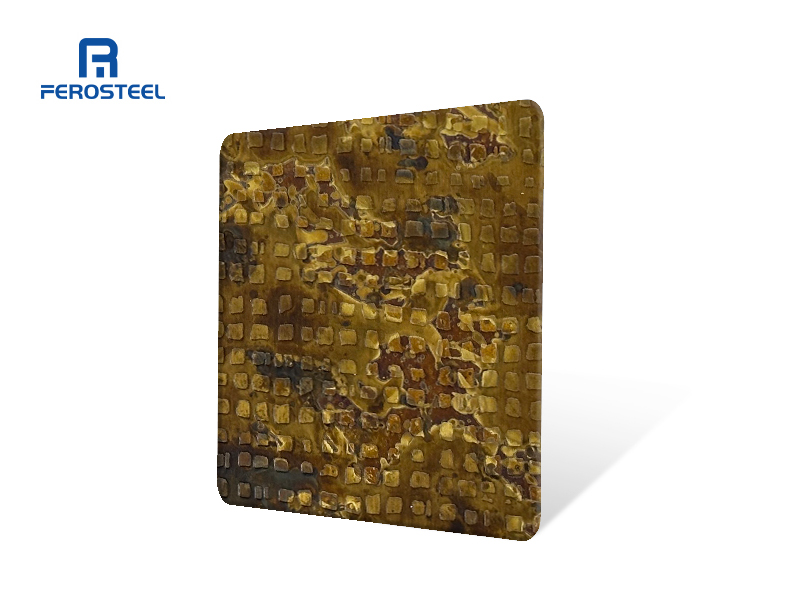
Quick Answer: A gold PVD stainless steel sheet is a stainless steel panel coated with a titanium-based layer — usually titanium nitride (TiN) — deposited in a vacuum chamber. The result is a true metallic gold finish with surface hardness around 2,000–2,500 HV, color stability of 10–15 years indoors, and no fading, peeling or tarnishing under normal interior use.
Gold PVD stainless steel sheet is specified when a project needs real metal with a warm gold tone: hotel lobbies, retail flagships, elevator interiors, feature walls, ceiling coffers and column cladding. The specification problem is rarely "gold or not gold". It is whether the gold layer will survive installation, cleaning chemicals and ten years of hand contact — and whether the supplier can deliver consistent color across 60+ sheets from the same batch.
This guide covers what the material is, how the PVD coating process works, the specifications you need on a purchase order, how gold PVD compares with electroplating and gold paint, a worked cost example, and the technical limits that decide whether the sheet suits your application.
Contents
A gold PVD stainless steel sheet is a flat stainless steel panel — normally 201, 304 or 316L — whose surface has been coated with a thin ceramic-metal film in a vacuum chamber. The film is titanium nitride or a related compound such as zirconium nitride or titanium carbonitride. It is not paint and not a gold alloy layer; it is a hard compound bonded to the steel at the atomic level.
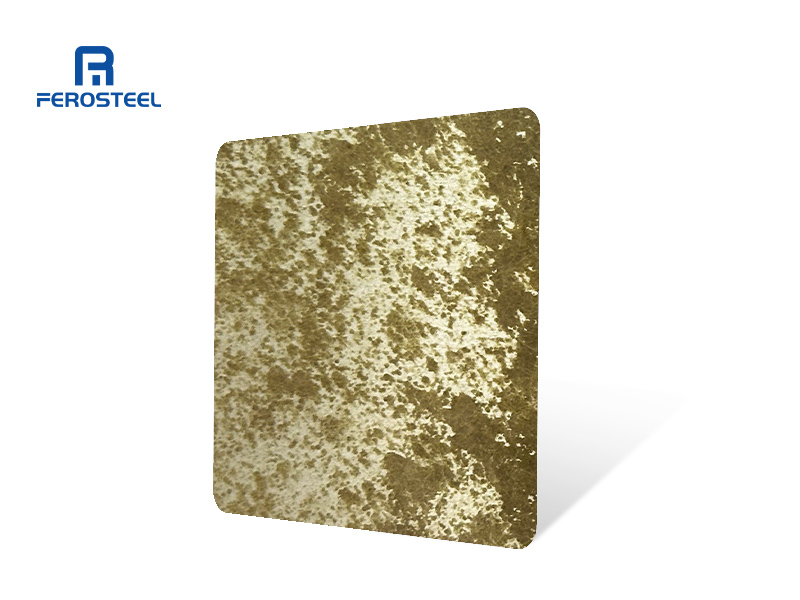
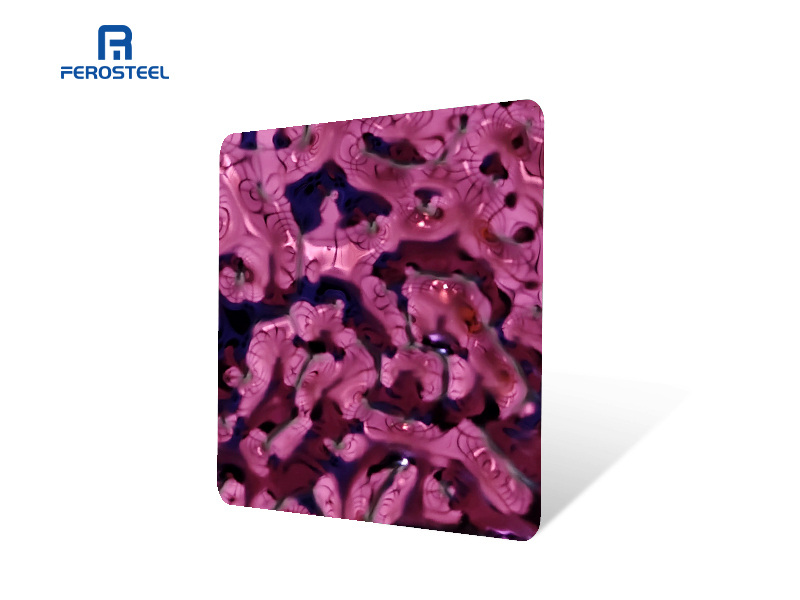
The gold color comes from the coating chemistry, not from dye. TiN produces a classic 24K-like yellow gold. ZrN shifts toward champagne and pale brass. TiCN and ZrN variants produce rose gold and copper-gold. Because the color is created by the film's optical properties, it does not bleach under UV light the way organic coatings do.

PVD stands for Physical Vapor Deposition. The process runs in a high-vacuum chamber at roughly 150–400 °C, well below the temperature at which stainless steel distorts. Titanium is vaporized by a cathodic arc or sputtered from a target, reacts with nitrogen gas, and condenses on the sheet surface as a dense nitride layer 0.3–1 μm thick.
Before coating, the sheet is mechanically polished, brushed or embossed to its final finish, then chemically cleaned and dried. Any fingerprint, oil spot or polishing residue becomes a visible defect under the coating, so surface preparation decides final appearance more than the coating step does. Coated sheets are then inspected under controlled lighting and protected with a laser-cut PE film.
Three process variables determine quality: vacuum level, deposition time and target current. Under-deposition leaves a thin, bluish, easily scratched film. Over-deposition builds internal stress and causes micro-cracking at bend lines. Reputable plants record these parameters per batch and keep color coupons for traceability.
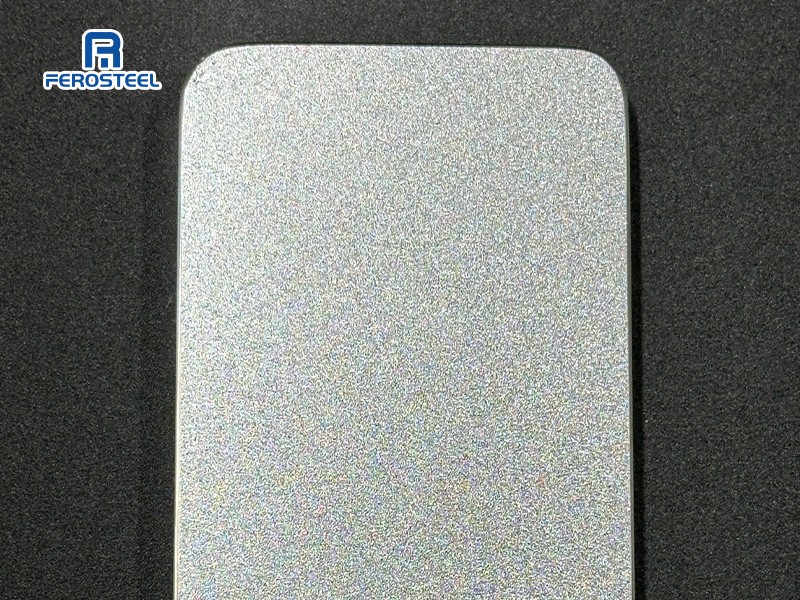
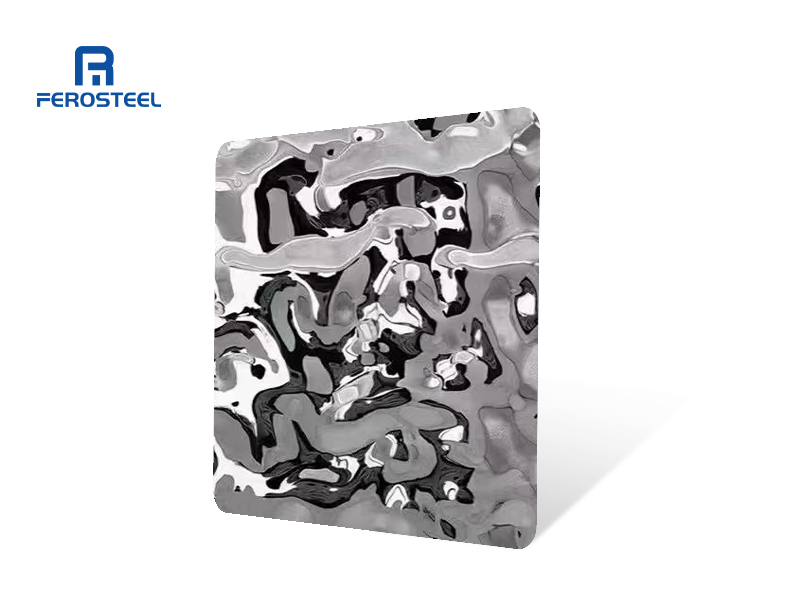
The substrate finish changes the visual result completely. A No.8 mirror substrate gives a highly reflective gold that reads as polished brass. An HL hairline substrate gives a brushed gold that hides fingerprints — the safer choice for elevator doors and wall panels. Embossed substrates such as water ripple gold hold the coating on raised and recessed areas and create a shimmering, non-flat surface favoured in ceilings and bar fronts.
Measured film thickness is the fastest incoming check on a gold PVD sheet. A reading below 0.25 μm usually means a fast line speed and predicts a colour that drifts pale and scratches white. A reading above 1.2 μm often signals a stressed film that will craze at tight bends. Ask for the reading in μm on the inspection report, not a verbal "standard thickness".
Most quality disputes on gold PVD sheet trace back to a vague PO. The table below lists what should be written explicitly.
| Parameter | Typical options | Notes for buyers |
|---|---|---|
| Grade | 201 / 304 / 316L | 304 for interiors; 316L for humid, chlorine or marine-adjacent interiors |
| Thickness | 0.3–3.0 mm (0.5–1.2 mm most common) | Below 0.5 mm, flatness and oil-canning risk rises sharply |
| Sheet size | 1219×2438, 1219×3048, 1500×3000 mm | Confirm cutting direction before coating; edge trim 5–10 mm |
| Substrate finish | No.8 mirror, HL hairline, No.4, vibration, embossed | Finish is applied before coating, not after |
| Coating | TiN, ZrN, TiCN | Determines gold tone: yellow, champagne, rose |
| Color tolerance | ΔE ≤ 2.0 vs. approved sample | Ask for a physical coupon, not a screen render |
| Coating thickness | 0.3–1.0 μm | Thicker is not automatically better; adhesion matters more |
| Surface protection | Laser PE film, double-sided | PVC film can leave adhesive ghosting in hot climates |
| Flatness | ≤ 3 mm/m | Critical for large ceiling panels viewed at a low angle |
Two specification habits prevent most site problems. First, approve a physical color coupon from the actual production batch, because screen colours and lab dips never match. Second, state the fabrication sequence: cutting, bending, welding, then coating — or coating then cutting, with exposed edges accepted.
Buyers comparing quotes often receive three different products under the same "gold stainless sheet" name. They behave very differently.
| Property | PVD coating | Electroplating | Gold paint / powder coat |
|---|---|---|---|
| Layer thickness | 0.3–1.0 μm | 1–10 μm | 20–80 μm |
| Surface hardness | ~2,000–2,500 HV | ~400–600 HV | <100 HV (2H pencil) |
| Adhesion | Atomic-level bond, passes cross-hatch and bend tests | Good, but blisters if pre-treatment fails | Mechanical only, chips at edges |
| Colour stability indoors | 10–15 years | 3–7 years, tarnishes and darkens | 2–5 years, fades and chalks |
| Fingerprint and chemical resistance | High; unaffected by standard detergents | Moderate; sensitive to acids | Low; alcohol and solvents attack it |
| Repairability | Not repairable locally | Re-plateable in a bath | Touch-up possible, colour mismatch |
| Relative cost | Highest | Medium | Lowest |
| Best use | High-visibility, long-life interiors | Low-contact decorative trim | Budget, short-life or mock-up work |
The practical rule: if the panel will be touched, cleaned weekly, or seen for more than five years, PVD is the only one of the three that holds its appearance. If the surface is out of reach and the project horizon is short, paint can be defensible on cost. Electroplating sits in the middle and is increasingly replaced by PVD in export specifications.

Consider a hotel lobby ceiling of 180 m² in gold PVD mirror sheet, 1.0 mm 304, panels 1219×2438 mm, with 8% cutting waste.
Two lessons from this calculation. Waste allowance for mirror gold is higher than for hairline, because a scratched or mis-cut mirror panel cannot be touched up — plan 8–12% rather than 5%. And because freight is charged on volumetric or actual weight, the 1.5-tonne figure matters as much as the square-metre price when comparing suppliers.
Gold PVD stainless steel performs best where the panel is decorative, visible and lightly handled. Typical applications include hotel and casino lobby wall cladding, ceiling coffers and bulkheads, reception desk fronts, retail display fixtures, bar and restaurant back-bars, elevator door and cabin panels, column and pillar cladding, and signage backplates.

It also suits door surrounds, lift sills that are not walked on, washroom vanity aprons, and exhibition joinery. Architectural designers frequently pair champagne gold hairline sheets with darker stone or walnut, and use mirror gold for narrow reveal strips where the reflection reads as a line of light.
The material is a poor fit for three situations. High-traffic floors and stair treads wear through any decorative coating, including PVD. External façades in coastal or industrial atmospheres need 316L with a PVDF system, not a decorative PVD film. And complex fabricated shapes with sharp compound curves waste coating, because PVD is a line-of-sight process and recessed geometry receives a thinner film.
Understanding these limits before ordering avoids expensive rework.
The coating is thin. At 0.3–1.0 μm, it is roughly 1/100th the thickness of a human hair. It resists scratching better than paint because of hardness, but a deep gouge through to the steel cannot be repaired on site. Order 5–10% spare panels.
Cutting and welding after coating expose bare metal and burn the film along weld seams and laser-cut edges. Best practice: fabricate first, then coat; or coat flat sheets and design joints so every cut edge sits inside a trim or shadow gap. Where coating must come first — usually for schedule reasons — specify edge trims such as U-channels and accept that weld areas will need mechanical finishing, not re-coating.
Bending needs a radius. Tight bends crack the film. Keep the inside bend radius at 1.5× sheet thickness or more, and specify bend-direction testing on the coupon.
Cleaning is simple but not unlimited. Warm water with a mild neutral detergent and a soft cloth is correct. Abrasive pads, chlorine bleach and strong acids dull or stain the film, and hydrofluoric-acid-based stainless cleaners must never be used.
Color varies slightly between batches. TiN gold is process-sensitive. For a single elevation, insist on one batch; for phased projects, hold a retained sample and re-approve each delivery against it.
Ferosteel manufactures decorative stainless steel sheets in Foshan, China, and supplies gold PVD sheet in 201, 304 and 316L with mirror, hairline, vibration and embossed substrates. Sheets are coated in-house, so substrate finish, colour batch and film thickness are controlled in one production run rather than across two suppliers.
Because we also produce water ripple pattern sheets, mirror finish sheets, antique-finish panels and U-shaped trim profiles, edge trims and adjacent surfaces can be matched to the same gold batch — the most common failure point when a project buys panels and trims from different factories. See the full product range or our elevator door sheet range for cabin applications.
Five checks before you accept a shipment: a retained colour coupon signed by both parties; coating adhesion by cross-hatch or 90° bend test; film thickness reading on a coated coupon; flatness measured on a surface plate; and PE film condition with no adhesive transfer after 48 hours under sunlight.
To quote accurately, we need seven details: grade (201/304/316L), thickness (mm), sheet size (mm), finish (mirror / hairline / vibration / embossed), colour (yellow gold, champagne, rose gold, bronze), quantity (sheets, m² or kg), application (ceiling, wall, elevator, joinery) and destination port. Send them with a reference image and we will reply with a colour coupon, indicative price and lead time.
Is gold PVD stainless steel real gold?
No. The gold colour comes from a titanium nitride or zirconium nitride film, not from gold metal. It contains no gold content, which is why it costs a fraction of gold-leaf or gold-alloy cladding while offering better wear resistance.
How long does the gold colour last indoors?
Under normal interior conditions — no abrasion, neutral detergents, no direct chlorine — the colour holds 10–15 years. Suppliers typically warrant 10 years for indoor vertical applications. Exterior and coastal use is outside a decorative PVD warranty.
Can gold PVD sheet be welded or cut after coating?
It can be cut and welded, but the heat-affected zone loses the coating and exposed steel shows. Weld seams must be ground, and the area cannot be re-coated on site. Design for concealed joints, or fabricate before coating.
Does the coating peel off?
A correctly deposited PVD film does not peel, because it is not a laminated layer — it is bonded at the atomic level. Failures that look like peeling are usually poor pre-treatment, contamination under the film, or mechanical damage at a bend line.
What is the difference between champagne gold and yellow gold?
Both are PVD films with different chemistry and gas ratios. Yellow gold (TiN) is a saturated 24K tone. Champagne gold is paler and slightly pink-grey, produced with ZrN-based chemistry, and is more popular in minimalist European interiors because it reflects less.
What is the minimum order quantity?
For standard 1219×2438 mm sheets in 304, MOQ is typically one tonne, roughly 40–45 sheets at 1.0 mm. Smaller trial quantities can be quoted for approved colours held in stock; custom colours and embossed substrates require a full production batch.
Which grade should I choose for a bathroom or spa?
Use 316L. Chlorides from cleaning agents and humidity attack 201 and can pit 304 over time. The coating protects the surface but not the cut edges and drilled holes, where corrosion starts. See our comparison of 304 and 316 stainless steel.
Author: Ferosteel Technical Content Team — reviewed by the surface finishing department, Foshan.
Last updated: 9 November 2026.
Sources and standards
 Office address: 26 Floor, Shibo Financial Center, Fenjiang South Road No.38, Chancheng, Foshan, GuangDong, China
 Phone
: +86 -18024913898
 Email
: [email protected]


 IPv6 network supported
 leave a message