Liquid metal finish and stainless steel panels both deliver real metal surfaces, but they are different materials built for different jobs. A liquid metal finish is a metal-particle coating applied by hand, which produces a seamless metal look on curved walls, columns, and furniture. A stainless steel sheet is a rigid, factory-manufactured panel with a stamped or coated texture, specified for large flat surfaces, high-traffic areas, and outdoor or marine environments. Specify liquid metal when geometry is complex and seams are unacceptable; specify stainless steel sheets when durability, consistency, fire performance, and cost at scale matter most.
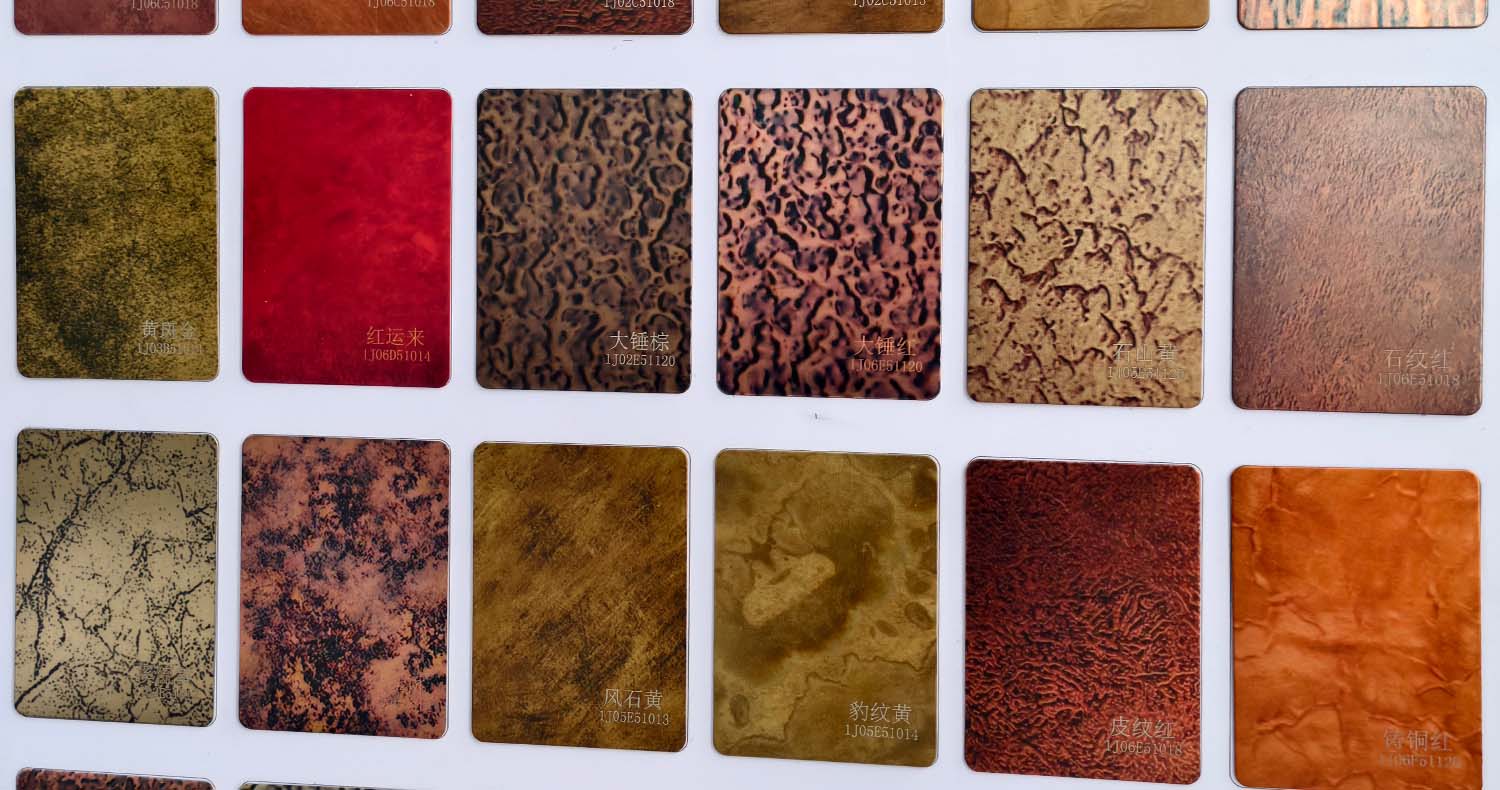
A liquid metal finish is a coating made of real metal powder suspended in a binder, applied by trowel, spray, or brush to almost any substrate, including walls, ceilings, furniture, and columns. Once cured and sealed, it looks and behaves like solid metal — it can be polished, brushed, oxidized, and patinated — but it has no rigid panel behind it and no visible seams.
This is why liquid metal is the default answer for complex geometry. An arched wall, a curved reception desk, or a sculpted column simply cannot be clad in flat sheets without visible joints; a liquid metal finish covers the whole surface as one continuous skin. It is also lightweight: because the metal is applied as a thin coating rather than a solid plate, it adds far less dead load than metal panels.
The material is no longer a niche. The global liquid metal wall panel market is projected to grow at a CAGR of 8.7% from 2024 to 2030 and exceed USD 12.6 billion by 2030, driven by demand for premium, reflective interior finishes in commercial and high-end residential projects. Within the liquid metal paint segment, copper and bronze account for the largest share at 39.2% (2025), and high-end residential interiors make up 49.0% of application demand.
Decorative stainless steel sheets are factory-manufactured panels made from 304 or 316 stainless steel, processed with a range of surface treatments: mirror polishing, PVD color coating, embossing, water ripple stamping, etching, hairline brushing, and antique copper or black titanium finishes.
Unlike a coating, a stainless steel sheet is the material itself. The texture is a permanent mechanical deformation (in the case of water ripple and embossed patterns) or a metallurgically bonded surface layer (in the case of PVD), not a painted film that can wear off. This gives panels three structural advantages: guaranteed consistency across large areas, a non-combustible metal surface, and predictable long-term durability in demanding environments.
The market reflects this strength. The global decorative metal sheets market was valued at USD 5.23 billion in 2025 and is forecast to grow at a 5.25% CAGR through 2032. The broader decorative stainless steel market was estimated at USD 35.5 billion in 2025, projected to reach USD 61.4 billion by 2034 at a 6.2% CAGR, with Asia Pacific holding the largest revenue share at 42.5%.
When grade matters, the rule is simple: 304 stainless steel (18% chromium, 8% nickel) suits indoor and dry environments; 316 stainless steel (16% chromium, 10% nickel, 2–3% molybdenum) resists chloride and chemical corrosion, making it the choice for coastal, marine, and outdoor applications.
| Comparison Point | Liquid Metal Finish | Decorative Stainless Steel Sheet |
|---|---|---|
| Material nature | Metal-particle coating applied to a substrate | Rigid, factory-manufactured metal panel |
| Seams | Seamless, even on curves and complex geometry | Visible joints required between panels |
| Surface consistency | Hand-applied; subtle variation is part of the aesthetic | Machine-consistent across the entire batch |
| Durability | Good, but depends on substrate and sealant quality | Inherits stainless steel's corrosion and impact resistance |
| Fire performance | Depends on the underlying substrate | Non-combustible metal surface |
| Outdoor / marine use | Rarely recommended; primarily an interior finish | 316 grade is specified for coastal and exterior use |
| Cost per m² | Higher; roughly double a standard PVD colored panel at factory level | Lower at scale, especially for large flat areas |
| Lead time | On-site application, shorter supply chain | Requires panel fabrication and production lead time |
| Repairability | Touch-up and re-seal possible on site | Damaged panels must be replaced individually |
| Weight | Lightweight coating, minimal structural load | Adds real dead load to the structure |
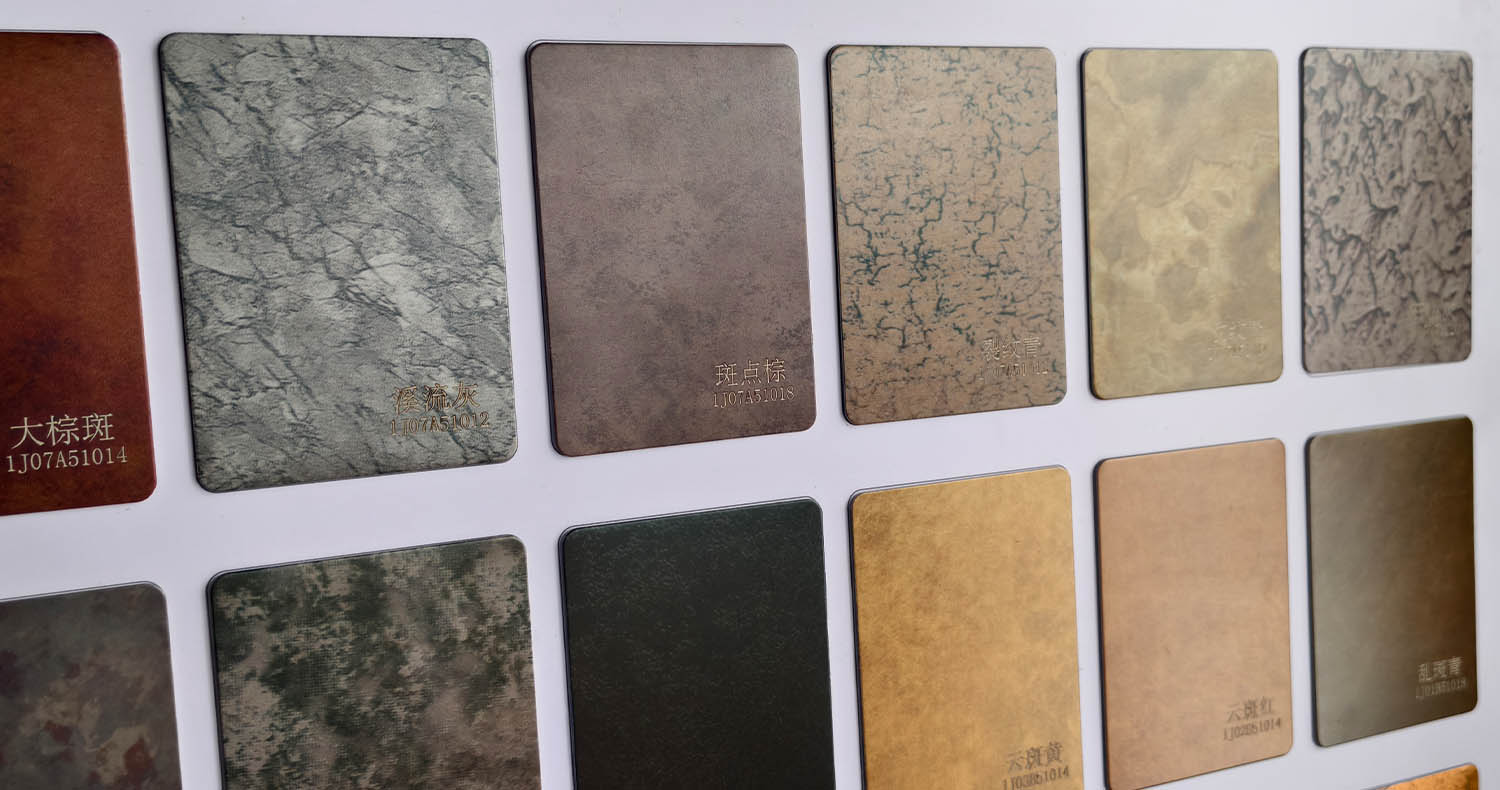
Specify a liquid metal finish when:
Specify stainless steel sheets when:
Walk any project through these five questions before specifying:
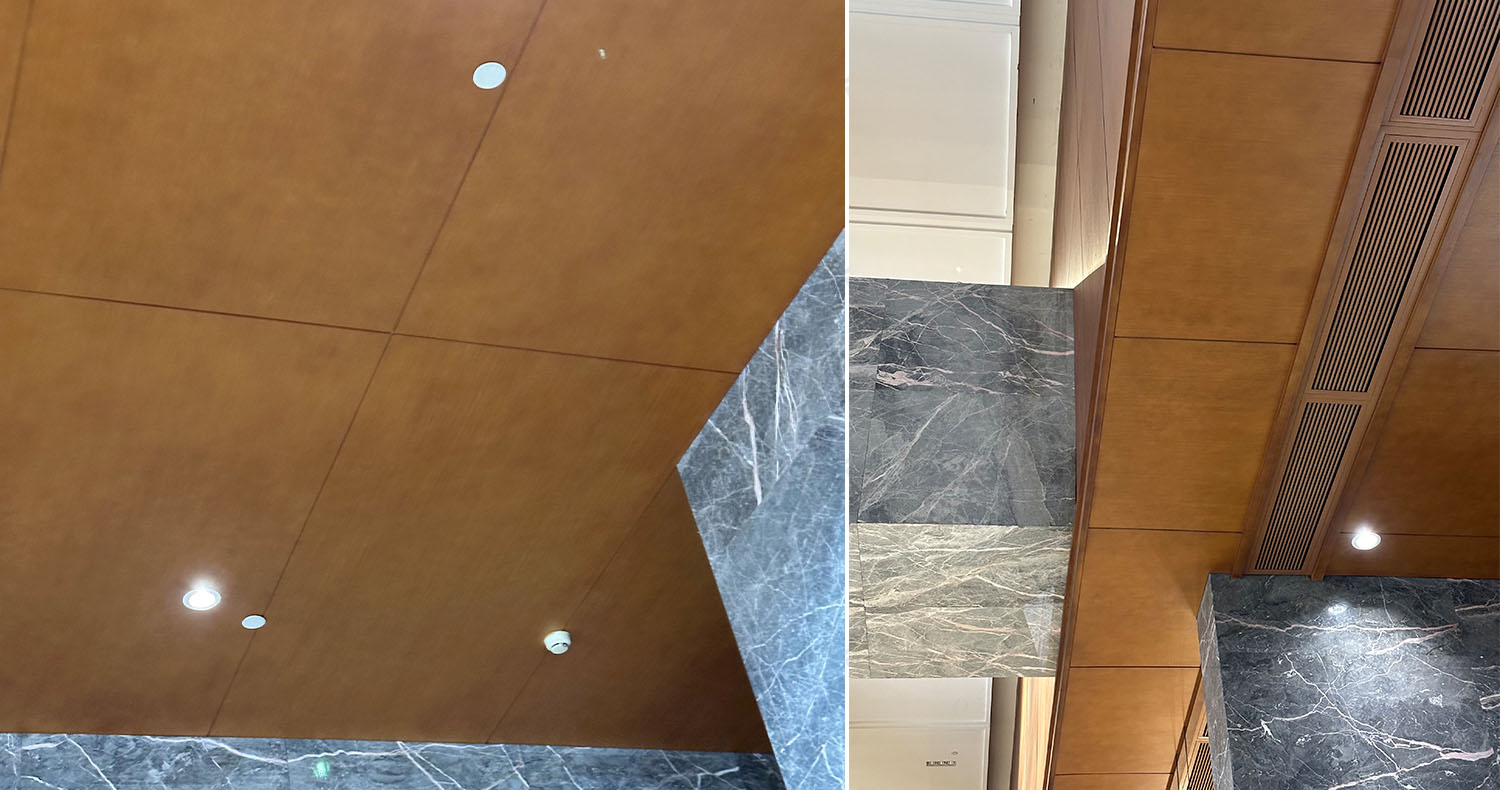
Yes. Liquid metal contains genuine metal particles — copper, bronze, tin, or aluminum — suspended in a binder. After curing and sealing, the surface can be polished, brushed, and patinated using standard metalworking techniques, which is why it develops a real patina over time instead of fading like paint.
Rarely. Liquid metal finishes are primarily an interior solution. For exterior or coastal projects, 316 stainless steel sheets are the safer specification because the metal itself provides the corrosion resistance without relying on a coating system.
It depends on the geometry and scale. For large flat surfaces, stainless steel panels are significantly cheaper per square meter and more predictable at volume. For complex, curved, or small bespoke surfaces, liquid metal can be more economical because it avoids custom fabrication and panel joints.
A well-applied and properly sealed liquid metal finish performs for decades in interior use. Its lifespan depends on substrate preparation, the sealant system, and the amount of physical contact the surface receives; high-traffic surfaces need periodic re-sealing.
Yes. Liquid metal coating can be applied to almost any clean, prepared substrate, including stainless steel. This combination is sometimes used to create a seamless metal look where factory panels would leave visible seams.
Stainless steel sheets. Elevator cabins are high-contact, high-traffic enclosed spaces where scratch resistance, machine-consistent finishes, and easy panel replacement matter more than seamless coverage.
 Office address: 26 Floor, Shibo Financial Center, Fenjiang South Road No.38, Chancheng, Foshan, GuangDong, China
  Phone
: +86 -18024913898
Phone
: +86 -18024913898 Email
: [email protected]
Email
: [email protected]


 IPv6 network supported
 leave a message