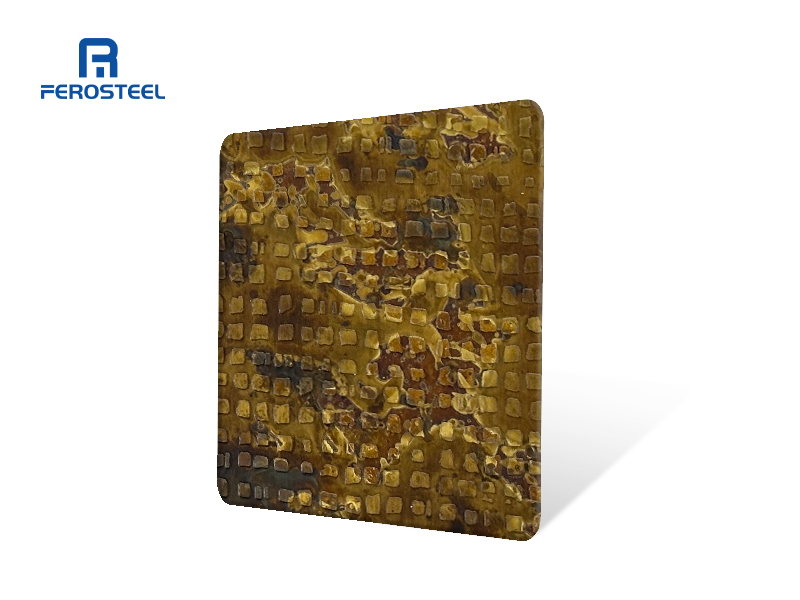
When architects, interior designers, and kitchen contractors specify surfaces for high-traffic environments, stainless steel countertop sheets consistently rank at the top of the recommendation list. Their combination of hygiene, durability, and modern visual appeal makes them the default choice for commercial kitchens — and an increasingly popular pick for premium residential projects.
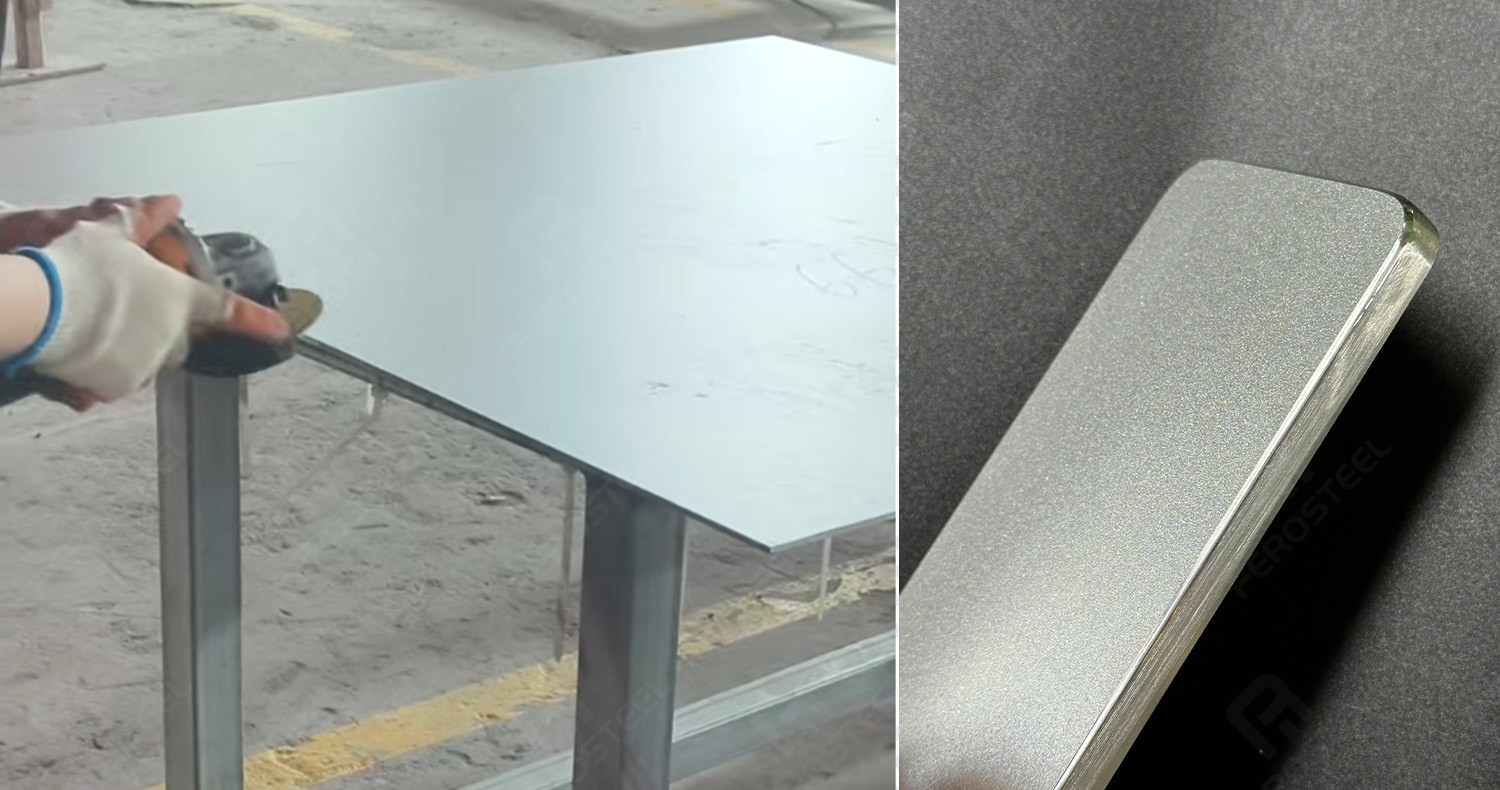
This guide walks you through everything a design professional needs to know: material grades, surface finishes, fabrication options, comparison with alternative materials, and how to specify the right stainless steel countertop sheet for your next project.
The global market for decorative stainless steel has expanded well beyond industrial kitchens. Today's designers specify kitchen stainless steel sheet surfaces in:
The reasons are functional, not just aesthetic. Stainless steel is non-porous, so it cannot harbor bacteria, won't stain from wine, coffee, or beet juice, and tolerates heat up to 800 °F (427 °C) without scorching. It is also 100% recyclable, with roughly 60% of new stainless steel made from melted scrap — a meaningful sustainability story when clients demand LEED documentation.
Choosing the right alloy is the single most important decision in your specification. Each grade delivers a different balance of corrosion resistance, formability, and cost.
| Grade | Chromium / Nickel | Corrosion Resistance | Formability | Best Application | Relative Cost |
|---|---|---|---|---|---|
| ------- | ------------------- | ---------------------- | ------------- | ------------------ | --------------- |
| 201 | 16-18% Cr / 3.5-5.5% Ni | Moderate | Excellent | Indoor residential, dry commercial | $ |
| 304 | 18-20% Cr / 8-10.5% Ni | High | Excellent | Most commercial kitchens, residential | $$ |
| 316L | 16-18% Cr / 10-14% Ni / 2-3% Mo | Superior (marine grade) | Good | Coastal, chlorinated, lab environments | $$$ |
For the majority of interior kitchen projects, 304 stainless steel countertop sheets deliver the best balance of price and performance. Reserve 316L for projects within 5 km of a coastline, indoor pool areas, or facilities that use harsh chemical sanitizers.
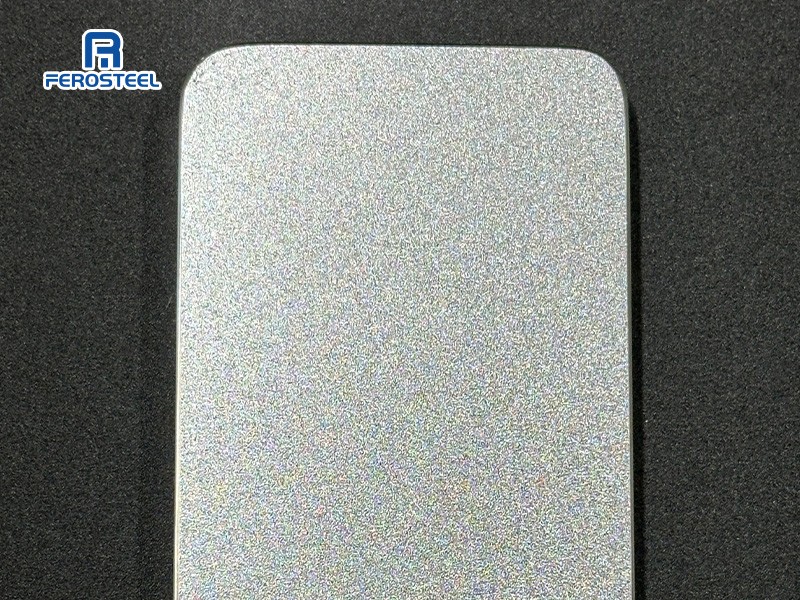
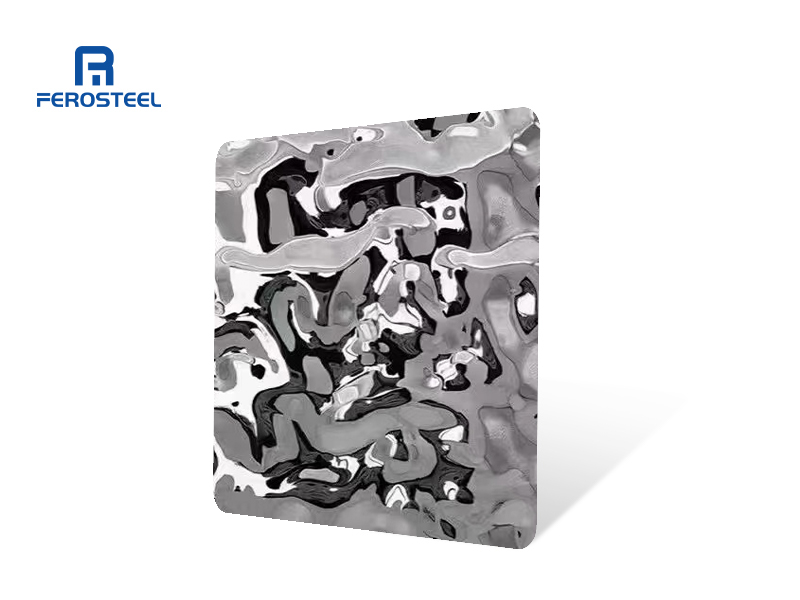
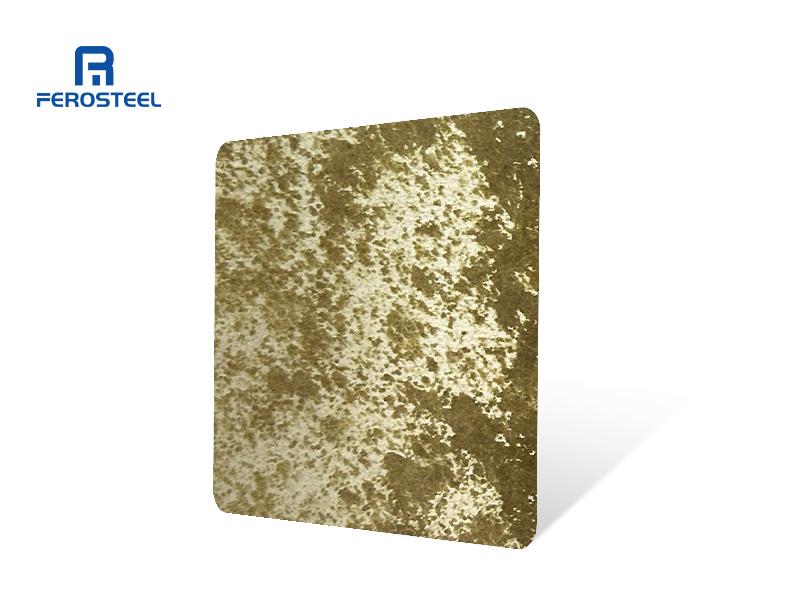
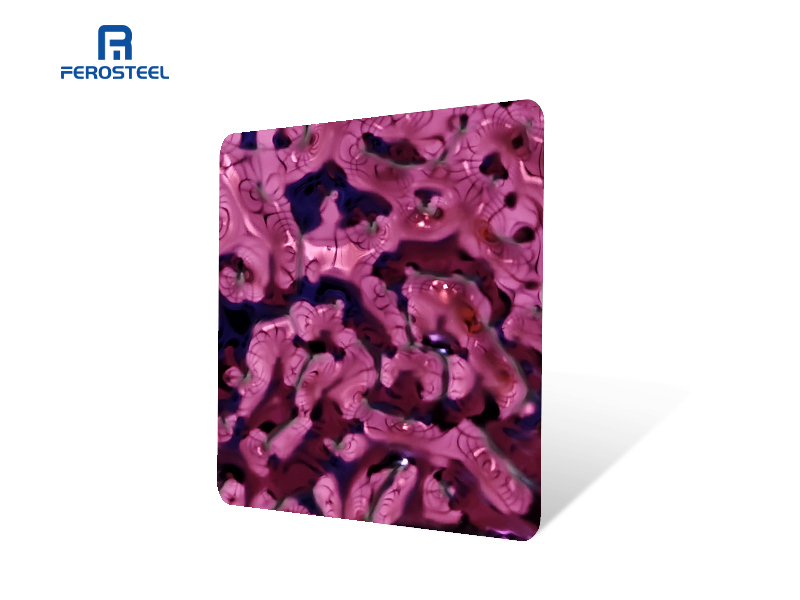
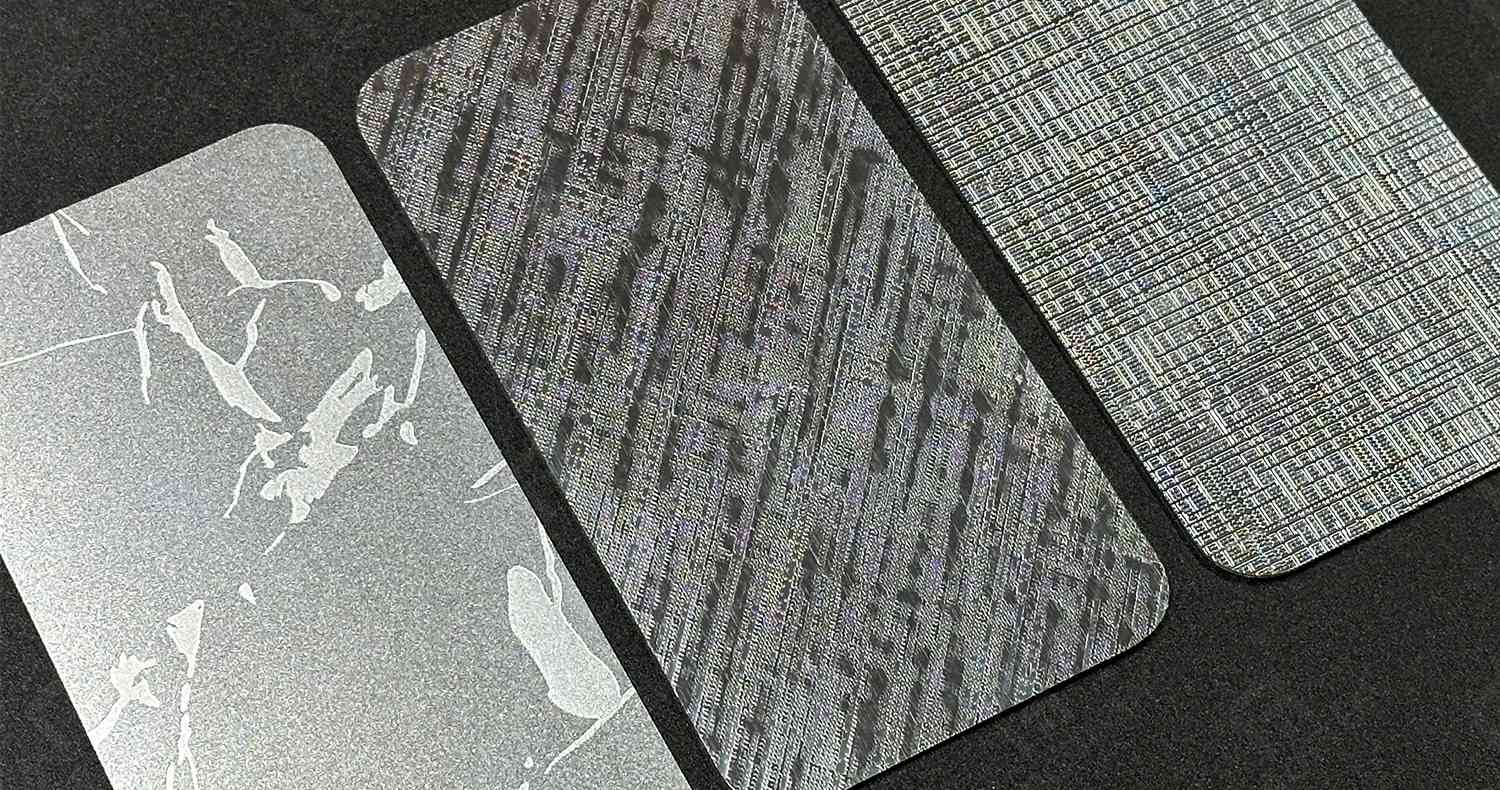
The finish you select defines both the visual character and the functional performance of the surface. Ferosteel supplies countertops in a curated range of finishes:
For most working kitchens, cross hairline stainless steel countertop sheet is the best-selling option — it pairs the durability of 304 with a finish engineered to mask daily wear.
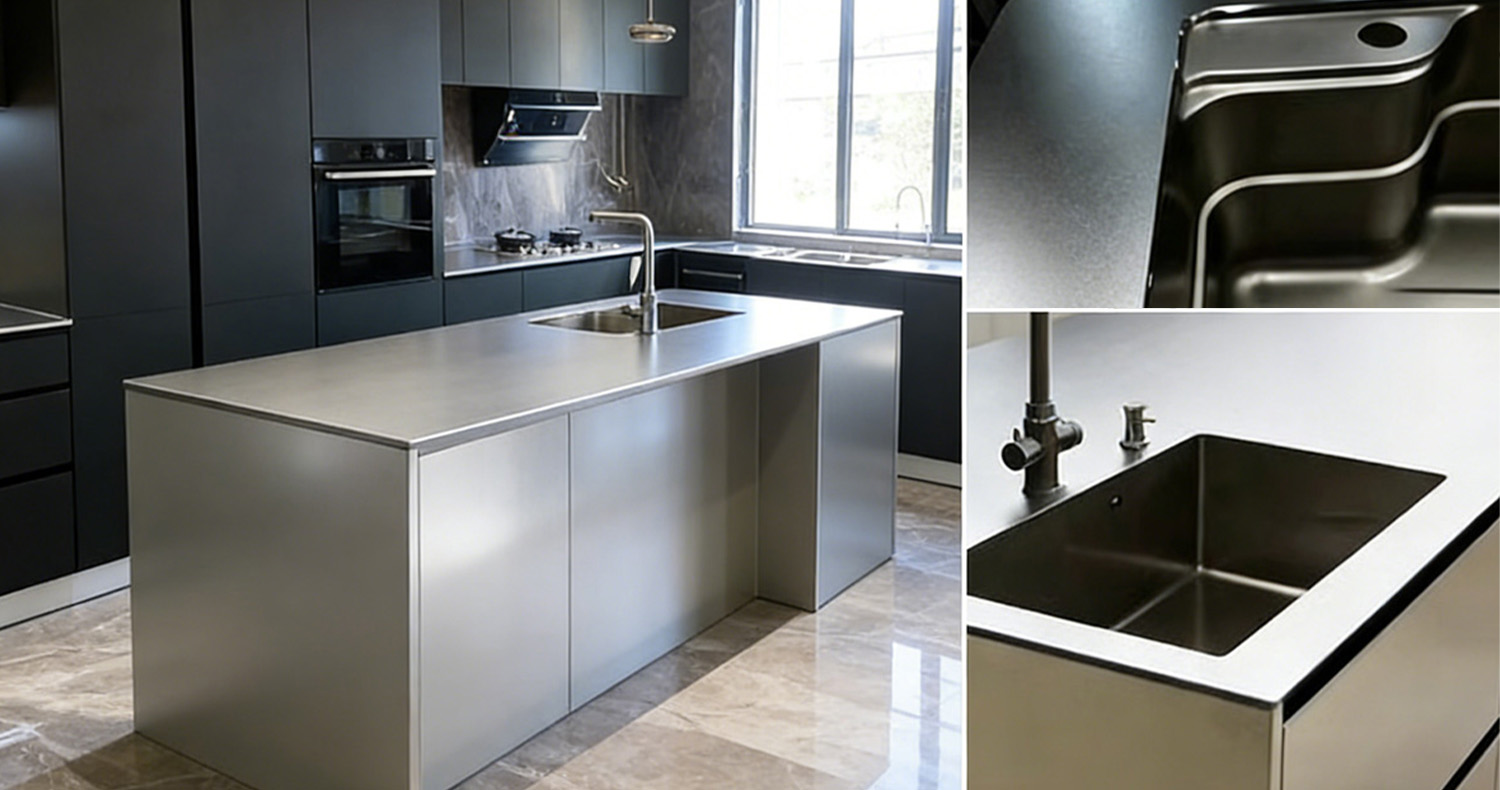
Ferosteel stocks and fabricates stainless steel countertop panels in the following common dimensions:
For residential installations over cabinetry, 1.0–1.2 mm panels bonded to a waterproof MDF or plywood substrate is the most cost-effective construction. Commercial back-of-house counters typically use 1.5–2.0 mm panels with reinforced edges. Feature islands and bar tops often specify 3.0 mm solid stainless steel for a chunky, monolithic appearance.
Designers often weigh stainless steel against engineered stone, solid surface, and natural materials. The table below summarizes how a properly specified stainless steel countertop sheet compares:
| Property | Stainless Steel | Quartz | Granite | Solid Surface | Wood (Butcher Block) |
|---|---|---|---|---|---|
| ---------- | ----------------- | -------- | --------- | --------------- | ---------------------- |
| Heat Resistance | Excellent | Good (seams can discolor) | Excellent | Poor (melts) | Poor (burns) |
| Stain Resistance | Excellent | Excellent | Good (requires sealing) | Excellent | Poor |
| Hygiene | Excellent (non-porous) | Excellent | Good (porous) | Excellent | Poor |
| Repairability | Excellent (re-polish) | Difficult | Difficult | Excellent (sandable) | Good (sandable) |
| Impact Resistance | Good (dents) | Fair (chips) | Good (chips at edges) | Good | Good |
| Design Aesthetic | Modern, industrial, professional | Stone-like, broad color range | Natural stone variation | Seamless, integrated | Warm, traditional |
| Lifespan | 30+ years | 15-25 years | 20+ years | 15-20 years | 10-20 years |
| Recyclability | 100% | Limited | Limited | Limited | Yes |
Stainless steel wins on hygiene, heat tolerance, longevity, and end-of-life recyclability. Where it loses points is dent resistance — heavy pots dropped from height will leave a mark. Specify thicker gauges (2.0 mm+) or a sound-deadening underlayment in chef-driven environments.
Ferosteel fabricates countertop sheets to shop drawings with the following standard capabilities:
Standard turnaround is 15-20 working days from approved shop drawings, with expedited options for projects under tight schedules.
A well-maintained stainless steel surface can serve for decades. The routine is simple:
To restore a scratched or dull surface, refinish with a non-woven abrasive pad (Scotch-Brite or equivalent) matched to the original finish direction. Deeper scratches can be blended by a professional fabricator using progressively finer abrasive belts.
For projects where pristine appearance matters as much as performance, Ferosteel offers:
These are particularly recommended for residential kitchen islands, bar fronts, and any vertical surface within arm's reach where users will frequently touch the metal.
What is the best stainless steel grade for a residential kitchen countertop? Grade 304 is the industry standard for residential kitchens. It offers excellent corrosion resistance, is food-safe, and is the most cost-effective choice for indoor applications. Choose 316L only for coastal homes or environments with frequent exposure to chlorides.
Can stainless steel countertops rust? Quality 304 stainless steel will not rust under normal kitchen conditions. Surface rust spots can appear if carbon steel particles (from wool, filings, or tools) are left on the surface and exposed to moisture. These are easily removed with a stainless steel cleaner and will not return once the contaminating particles are removed.
How thick should a stainless steel countertop sheet be? For residential installations over a substrate, 1.0–1.2 mm is standard. For commercial counters and feature islands, specify 1.5–3.0 mm. Thicker gauges resist denting and are easier to weld and refinish.
Do stainless steel countertops scratch easily? All brushed finishes will show fine scratches over time, but these blend into the directional grain and add character. Cross-hairline and vibration finishes are the most forgiving. Minor scratches can be buffed out; deep scratches can be re-polished by a fabricator.
Are anti-fingerprint coatings worth the extra cost? For high-visibility surfaces — island fronts, bar faces, appliance garages — yes. AFP coatings reduce visible fingerprints by approximately 80% and simplify daily cleaning. For back-of-house prep counters where appearance is secondary, standard hairline finish is more cost-effective.
Can I use stainless steel sheets for outdoor kitchen countertops? Yes, but specify 316L for outdoor installations to withstand weather exposure. Consider a hairline or vibration finish to reduce glare, and design a slight slope (1-2%) to shed rainwater.
Need a quote for your next project? Ferosteel supplies stainless steel countertop sheets in 201, 304, and 316L grades, with custom cut-to-size, edge profiling, and finishing services for architects, contractors, and distributors worldwide. Contact us for free samples and quotation — our team typically replies within 12 hours with pricing, lead time, and technical datasheets.
Ferosteel — Premium decorative stainless steel sheets for architecture, interior design, and commercial food service applications.
 Office address: 26 Floor, Shibo Financial Center, Fenjiang South Road No.38, Chancheng, Foshan, GuangDong, China
  Phone
: +86 -18024913898
Phone
: +86 -18024913898 Email
: [email protected]
Email
: [email protected]


 IPv6 network supported
 leave a message